Thursday, April 06, 2006

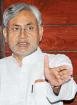
CM to adress FICCI on ?investment opportunities in Bihar?,


Friends Mr. NITISH KUMAR is trying hard to improve the image of BIHAR and project the state as a cradle for Developmental activities to the Industrialists and Bankers.

Another effort in this direction is to Address the FICCI in new Delhi.

Our Chief Minister Mr. Nitish Kumar, is slated to,address the FICCI in New Delhi on April 8 on ?investment opportunities in Bihar?, a FICCI release stated

To put Bihar on fast-track, PM?s task force, state turn to ICICI

The ICCI Bank will help Bihar government formulate a model of private-public partnership in infrastructure development, keeping in view specific problems of the state.

This was decided at a meeting between the PM?s task force on Bihar and state officials on Tuesday, said task force chairman Satish C Jha.

Private companies are still wary of venturing into Bihar. The state recently invited tenders for four-laning of over 2000 km of National Highway on build, operate, transfer basis. The government and private partners were to share the costs on a 40:60 ratio and not single bid came.

?Now the Centre may consider on a case by case basis, funding 60 per cent and seeking 40 per cent from private partners,? Jha said.

The Task Force, set up in 2004, couldn?t make much headway because of political instability in the state.

But since February, the STF has held meetings with different department heads in the state, charting out roadmaps for each sector.

?The emphasis is on infrastructure and the attempt is to get private investments,? said Jha.

The state government is also planning to make the newly-formed Bihar Infrastructure Development Authority the single-window for all infrastructure-related decisions.

Bihar has no big contractors who own large quantities of construction equipment and this is seen as a big roadblock. The task force is now asking a Kolkota machinery leasing company to set up shop in Bihar.

Wednesday, April 05, 2006

FM to meet Bihar bankers in April


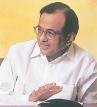
Bihar government will convene a state-level bankers meet, to be addressed by union finance minister P Chidambaram, next month to discuss necessary initiatives required for improving the credit-deposit (CD) ratio and lending by banks to the agricultural sector of the state.

Chidambaram has agreed to address the meet after the Budget session of parliament and the date for the meet will be finalised later, deputy chief minister Sushil Kumar Modi said.

He said chief secretary G S Kang was scheduled to visit Mumbai later this month to meet the governor of the Reserve Bank of India to discuss with him ways to improve the CD ratio in the state from the existing 31 per cent to 40 per cent.

Kang would request the governor to ensure enhanced lending by banks, particularly to the agriculture and small scale industries sectors.

The state government has decided to give stamp duty exemption on agricultural loans up to Rs 3 lakh and simplify the process of issuing land possession certificate besides amending several laws to create an atmosphere conducive for improving the CD ratio, he said.

Modi, who also holds the finance portfolio, said the government has raised the exemption limit for agricultural loan to Rs 3 lakh. Earlier stamp duty was levied on agricultural loans above Rs 15,000.

?It is a matter of great concern that the CD ratio of Bihar is just 31 per cent against the national average of 57 per cent,? Modi said, adding the bankers had been asked to achieve at least 40 per cent CD ratio.

Modi said against a deposit of Rs 41,982 crore in the first six months of the current fiscal, the credit flow was a meagre Rs 12,925 crore and held the commercial, rural and cooperative banks responsible for it.

He said the share of banks in the state?s annual credit plan in the small-scale industry sector was below 5 per cent and they have been asked to pay special attention to SSI financing, a core sector for enhancing the CD ratio.

Against a target of Rs 570.92 crore set for SSIs during 2005-06 the achievement was just Rs 158 crore till december 2005, he said.

Banks have been asked to pay special attention to the implementation of the prime minister?s Rojgar Yojana Scheme and assist self-help groups (shgs) seeking loans to start a venture.

Modi said against the over one lakh SHGs functioning in Andhra Pradesh, only 12,000 were registered in Bihar and that banks were reluctant to open their accounts.

Loan up to Rs 10,000 crore would be disbursed with the help of Nabard in the next financial year and a number of measures had been taken to check the flow of capital from the state.

He said of Rs 10,000 crore, Rs 7000 crore has been earmarked for priority sectors like agriculture and SSI and the remaining Rs 3000 crore for the non-priority sector.

Under the priority sector loan of Rs 4,670 crore would be distributed for agricultural sector and Rs 865 crore for setting up industrial units.

Banks have been instructed to issue kisan credit cards, artisan credit cards and self employment credit cards to weavers as the performance of the banks on this front was dismal.

Sugar majors plan Rs 1000 cr capex in Bihar

The sugar industry majors in the country have lined up investments worth over Rs 1,000 crore in Bihar.

The potential investors include Bajaj Hindusthan, the K K Birla group?s The Oudh Sugar Mills and Upper Ganges Ltd, Rajshree Sugar Mills and Dhampur Sugars.

Installation of new integrated units and expansion of capacity at some of the existing ones are in the pipeline.

The investments, which are waiting formal announcements from the companies, will be the first to be notched up by the new National Democratic Alliance government. The Central government has created a sort of ?thumbs up? mood by offering tax incentives to industry.

?The subsidy on sugar in Bihar works out to be Rs 1.50 per kg,? said C S Nupany, managing director of The Oudh Sugar Mills and president of Indian Sugar Mills Association.

?We will invest Rs 150 crore in expanding capacity at two existing units by 3,500 tonne crushed a day (TCD),? he added.

After this, the group?s total capacity from three units in Bihar will rise to 15,000 TCD in 24 months.

Bajaj Hindusthan, which leads the industry with 5.6 per cent share of the market, is also eyeing a unit in the state, preferably in Gopalganj or West Champaran area. ?It is too early. We will reach a decision in two-three weeks,? said an executive of the company.

Dhampur Sugars too has planned a unit or two in Bihar. ?We have sent a team to the state to assess the ground situation and take a decision by the end of this week. We are not looking at a unit below 3,000 TCD,? said Gaurav Goel, joint managing director.

Rajshree Sugar Mills is said to be considering a unit in Chakia. Sources say its will be in the 3,000-5,000 TCD range.

At present, Bihar has ten operational units with a capacity of 37,500 TCD compared with 28 units in the 1980s with capacity of 34,123 TCD.

Despite this, the state now contributes merely 4 per cent to the total national sugar output, compared with 30 per cent in the 1980s, as most of the capacity is idle.

Bihar sugar mills writhe under poor infrastructure


ANALYST'S VIEW
Business Standard.
Kunal Bose / Mumbai April 03, 2006

A vibrant sugar industry anywhere will necessarily be resting on the tripod of a sufficiently long crushing season, a good rate of recovery of sucrose and making the most of by-products like bagasse and molasses.

If this agro-based industry in Bihar has very little to show for, it is because on all the three counts, it has proved to be a laggard.


Indian Sugar Mills Association statistics will show that the nine operational factories in Bihar had enough cane to crush for 130 days during the 1999-2000 season. But the supply of cane had shrunk since and the factories could be operational for no more than 82 days in the last season.

The falling cane availability and then mostly of indifferent quality played havoc with the industry and the benighted Bihar, which once housed 20 per cent of the country?s sugar factories, is now left with only nine mills.

Some of the surviving mills would in all likelihood have gone under had not the commodity begun the bull run since April 2004. Ideally, as industry officials will say, sugar factories in the state should be engaged in cane crushing for at least 165 days in a year.

But for this to happen, infrastructure deficiencies will have to be overcome through joint efforts of central and state government and cane development work.

Farmers? rewards for his efforts are decided by the recovery of sugar from the cane they supply to factories. The health of the industry is also decided by the degree of sugar extraction from cane.

The rate of sugar recovery in Bihar has regularly remained below the national average and far below what factories in Maharashtra and Karnataka manage to get out of cane.

No less disappointing for the Bihar industry is the fact that cane productivity at around 40 tonne a hectare in the state is way below the national average of 60 tonne a hectare. The blighted Bihar sugar scene is also due to the poor varietal composition of cane.

This farm infirmity has seen to it that farmers are condemned to low productivity and factories to poor rate of sugar recovery. In this context, it is not surprising that many farmers have opted out of growing cane and land under the crop has shrunk to 110-120 lakh hectares, constituting a negligible percentage of the national cane area of about 4.4 million hectares.

Industry officials complain that in a long time, Pusa Research Institute has not released any new variety of high sugar-yielding cane suitable for Bihar.

But now there is the silver lining in that the government has agreed to build a sugar research institute at Kumarbagh in West Champaran district.

The mandate for the institute will be to develop cane strains, which respond well to the Bihar agro-climatic condition.

After Jharkhand was carved out, the only industry worth the name that Bihar is left with is sugar, no matter how much truncation it has gone through over the years.

Whatever the state of the industry at this point, the potential for expanding cane area, particularly in north Bihar, which offers the ideal agro-climatic condition for this cash crop, is high.

Those who have stuck to Bihar like the K K Birla group and Riga Sugar through all the trying years and the ones like Bajaj Hindusthan, Rajshree Sugar and Dhampur which are looking at the eastern state for building new factories make it clear that for Bihar to regain its rightful place in the country?s sugar industry, the Nitish Kumar government will first have to address the infrastructure and law and order issues.

The administration has no hesitation in admitting to the pitiable condition of village roads interfering with the movement of cane from field to factory as also the inadequacy of irrigation and the poor flood management system.

An industry official bemoaned that the poor road connectivity between farmland and factories and high cost of transportation have been a disincentive to growing cane. Importance of pucca road is underpinned by the fact that more the time taken to transfer cane to factories on harvesting, poorer will be the recovery of sugar.

The new administration leaves no one in doubt that it is keen to grow the sugar industry. This will be possible if farmers see merits in committing more land to cane.

In this context, the administration will do well to consider the suggestion that since quite a sizeable portion of funds earmarked for village road development remains unspent, the development council attached to each sugar factory and headed by district magistrates should be allowed to use at least 75 per cent of the total budget for building of roads and bridges in factory reserved areas.

For the cane crop to be healthy, the growing field needs to be irrigated five to six times between March and the onset of the monsoon.

But this is possible if only annual maintenance work of canal is completed by February and both state and privately owned tube-wells could be run with power from the grid. Bihar at this point is nowhere near the ideal situation.

Floods regularly visit north Bihar during the monsoon, thanks largely to unannounced release of water by Nepal. The high levels of silting of Bagmati, Buri, Gandak and Manusmara rivers and the absence of a drainage system have compounded the problem. Cane farmers pay dearly as their lands remain submerged for days.

?Get the rivers dredged and prevail upon New Delhi to open a dialogue with Kathmandu for flood control,? said an industry official.

The good thing is that there is no doubting the earnestness of the chief minister in turning over a new leaf. That the sugar industry promotion package for building of new factories with minimum daily cane crushing capacity of 5,000 tonne and expansion of the existing mills to 5,000 tonne and beyond has caught the fancy of investors is evident from the fact that the government has so far received as many 36 investment proposals.

In the framing of investment package, the government has seen to it that it is not accused of favouring only the large sugar entities as it befell the Uttar Pradesh government.

One assurance that the investors will need is the allocation of sufficiently large reserved cane area, which is not to be tinkered with in the future.

While this will allow new factories to stay in crushing for nearly six months in a year, they will have the incentive to do comprehensive extension work so that enough cane will be available on factory capacity expansion.

BSEB is exploring ways to pay NTPC dues


A major part of Bihar, including Patna, continues to face a severe power crisis with the National Thermal Power Corporation (NTPC) sticking to its decision to regulate its supply to the Bihar State Electricity Board (BSEB) with effect from Monday midnight over the payment of outstanding dues.

The NTPC move is the result of the Bihar government's failure to pay its outstanding dues to the tune of Rs 200 crore.
According to official sources, the NTPC regulated 15 per cent of the total electricity supplied to Bihar on Monday.

The state on Monday drew a total of 645 MW of power from the Central sector out of which 150 MW was taken at a higher price. Bihar could drew more power on Monday as compared to Sunday due to the resumption of power generation by one unit each of the NTPC's Talchar and Farakka plants.

BSEB officials are exploring ways to arrange for an additional amount of Rs 200 crore for immediate payment to the NTPC. Inquiries revealed that the BSEB buys electricity worth Rs 118 crore (at a cheaper tariff) but its income varies between Rs 65-70 crore

The BSEB is facing a dire financial crisis. The monthly deficit of the BSEB is around Rs 107 crore, said an official. The more it sells the more its losses are.

Out of the total allocation of 645 MW of power, the Patna Electric Supply Undertaking (Pesu) has been allocated 200 MW to cater to the needs of the state capital and its neighbouring areas.

BSEB spokesman Arjun Singh said: "We are ready to pay the arrears to the NTPC immediately if we get our share of 950 MW of power. Due to the shutdown of NTPC plants, we have hardly received 700 MW of power in recent months."

Except for Patna, none of the towns are getting uninterrupted power supply even for three hours. The people living in the towns like Bhagalpur, Darbhanga, Madhubani, Darbhanga and Madhepura have lost all hopes in this regard.

Hundreds of small industrial units, rice mills and government hospitals are badly hit due to the acute shortage of power in the state. "There is no respite from the ongoing crisis. Rather it has gone worse," said a city-based industrialist here.

As many as 1,000 small industrial units located in different parts of the state have been declared either sick or closed during the last five years mainly due to the non-availability of power, according to a recent survey conducted by the Bihar Industries Association (BIA).

"Only big announcements are made. The situation has become worse now. There is a total absence of work at the ground level," said an official.

The condition of almost all the government hospitals and health centres, including medical college hospitals, is pathetic due to the non-availability of power.

All the prominent doctors have installed high-capacity generators to run their private hospitals and nursing homes at Patna, Darbhanga, Muzaffarpur and other places.

More than 2,500 medium and small rice mills are operational in Bihar. Most of them are being run with the help of diesel generators due to the non-availability of electricity in rural Bihar. The rampant power theft in the city has put Pesu in a tight spot.

According to sources, thousands of residents of posh localities like S K Puri, Boring Road and Pataliputra Colony have illegally installed "special switches" on their premises to tamper with the readings of the power meters. The "special switches" have really become a headache for Pesu, said a Pesu official.

Rivals unite for spl status to Bihar

An all-party delegation led by CM Nitish Kumar will meet the PM and strongly plead for giving a special status to Bihar to get rid of its backwardness and ensure its all-round development.

This decision emerged after a four-hour debate in the assembly on a resolution which was adopted unanimously on Tuesday.

Participating in the debate, the CM stressed the need for a heavy doze of Central assistance as well as investment from private and public sectors to put Bihar on a par with developed states.

He said, "The development of Bihar is in the interest of everyone, the policy makers, industrialists and NRIs. If Bihar remains backward the country's progress will not be possible."

Nitish listed grounds for making such a demand saying Bihar has international borders with Nepal and Bangladesh, it is struck by recurring floods, power scenario is critical and also there is a problem of extremism.


"Bihar can overcome these problems once it gets financial support, investment and subsidy," he added. In a rare gesture of unity and rising above the political affiliation, the members sitting on both sides rose in unison and forcefully approved the resolution calling the Centre to include Bihar in the special category of states.

Members cutting across the party line favoured the move and urged their central leaders to take up the matter with the Prime Minister.

Although the debate was marred by occasional remarks from certain members on both sides blaming each other for the backwardness of Bihar.

"Why didn't Lalu Prasad do anything in the past and what is he doing even now?" or "What did the NDA do when it was in power and why didn't Nitish Kumar raise this issue as a Central minister?" kind of comments were made.

Even though those members too were heard urging others to rise above the party line and not indulge in politics.

Friday, March 31, 2006

From Bihar a bicycle that floats


Necessity they say, is the mother of invention. When floods ravaged Mohammad Saidullah's village, he found a new way to survive.

"Nadi ke kinare mera ghar tha. Aus usine mere ghar ko kat diya. (My house was near a river and it was destroyed by the river)," Saidullah says.

Saidullah designed a bicycle that can not only travel on land but also float on water.

He has named the Noor Bicycle, after his wife.

On land, it is just a bicycle and in water, it becomes a boat.

In a nation of a million cyclists - it took one man to think out of the box. And he even built in some special effects.

The cycle can goe front and back. If it gets stuck just pedal backwards and it will reverse.

"Isme ek aur khubi hai. Ye aage bhi chalti hai aur peeche bhi. Doosri cycle sirf aage jati hai (It has one more speciality. It can go front and back unlike other cycles which can only go forward.)," he adds.

Air floats keep the bike from sinking and fan blades propel it forward. It took five years and Rs 6 thousand to perfect the cycle.

The idea is brilliant and worthy of an IIT engineer.

Yet, Mohammad is just a simple villager. Geniuses like him live all around us.

Bihar radio man gets help from abroad


Patna, March 30 (IANS) It is now the turn of Indians living abroad to pledge their support to an enterprising man in Bihar whose popular radio station has been shut down after failing to pay license fee to the government.

After reading about the plight of Raghav Mahto and his Radio Raghav FM Mansoorpur 1, members of the Indian diaspora are contacting Mahto and the media in the state to find out how they can help revive the station.

Some NRIs are ready to fork out money.

Radio Raghav had been beaming popular programmes from Mansoorpur village in Vaishali district for the past three years and enjoyed a loyal clientele, drawn from all sections of the society.

Ajay Kapoor, an NRI in Britain, approached Bihartimes.com, a popular news portal of the state, and sought contact details of Mahto.

Ajay Kapoor, a Manchester-based psychologist, has written to Mahto.

Another NRI, Pranesh Sinha, has apparently offered to pay the money Mahto needs to get a radio licence. "I read about this talented man," Sinha said. "I am really interested in helping him."

The trouble for Raghav Radio started this month when the district administration directed officials to find out if it had permission to broadcast.

Mahto says he was not aware that a licence was required to start a radio station, and he suddenly realised his enterprise was an illegal operation. The annual fee for the licence is about Rs.400,000, money Mahto cannot raise.

"I don't even have the money for medical treatment of my father who is suffering from cancer," he has been telling friends.

The 20-something Mahto was forced by officials to sign a bond promising not to go back on air again.

Another person who has offered to help Mahto restart the radio is India-born Australian Harc Worsworth.

Ajay Kumar of bihartimes.com said he had received several queries from within India and abroad. "But neither the state nor the central government is making an effort to help this poor man."


Mahto is sad his radio has been closed down, but his neighbours spread over several villages are fuming.

In a rare show of unity, locals have decided to collect money to revive Radio Raghav, as it is popularly known.

"A large number of people have offered financial help to restart the radio station," Mahto told IANS over telephone.

One man, Damodar Singh, has announced a contribution of Rs.5,000. Others have vowed to raise funds.

"My hope lies in the peoples' support," Mahto said.

Vaishali district magistrate Sanjeev Hans said the station was closed down for violating the Indian Telegraphs Act.

A formal police complaint was lodged against Mahto and the radio equipment seized by a three-member team from the communications ministry in the village on Sunday.

For people residing in and around Mansoorpur village, Mahto is a hero. He is more popular than the local legislator and MP and people prefer Radio Raghav to the national channels.

The station ran community radio service providing local news and opinion in the local dialect as well as entertainment programmes for villages in Muzaffarpur, Vaishali and Saran districts.

Something for Yusuf:


Jayaprakash Narayan wanted something done to commemorate the memory of Yusuf Meherally. That task, undertaken 40 years ago has been an enduring commitment for an 82 year old man and his wife. Even today, not many young people can match their zeal for India.

Read their story here:

http://www.goodnewsindia.com/index.php/Magazine/story/ymc/

Nitish wants Mittal in Bihar


Bihar Chief Minister Nitish Kumar has decided to approach global steel majors, including Mittal Steel, and urge them to set up a steel plant in the state near its border with Jharkhand, close to Nawada.

Kumar has told The Indus Entrepreneurs, a global not-for-profit organisation focused on promoting entrepreneurship, that it should help in Bihar?s efforts to find a company that will invest in a steel plant.

Ramesh Yadava, a Silicon Valley professional, who is deeply interested in developing Bihar and was used by former Chief Minister Lalu Prasad as a pointsperson for the state in the US, is said to be exploring options, including approaching the Mittal group.

Bihar was denuded of its most important steel plants ? at Jamshedpur and Bokaro ? when the state was divided in 2000.

All the locational advantages because of which Bihar got two steel plants in the first place, accrued to Jharkhand. One of Bihar?s most important natural resources and ancillary industry was lost to Jharkhand.

Kumar, confiding in a group of non-resident Indian industrialists that visited Bihar a week ago, said the logic of locating steel plants near pit heads ? which is why the plants have now gone to Jharkhand ? was today obsolete.

Wednesday, March 29, 2006

Businessmen coming back to Bihar


MR G. S. KANG, CHIEF SECRETARY OF BIHAR


"Policies have been put in place to facilitate investments. We have new policies for sugar, entertainment... Until you have policies, you can't implement anything...

"We can only go up," said the Bihar Chief Secretary, Mr G. S. Kang. While 100 days might be too short a time to judge any performance, the Nitish Kumar Government in Bihar has made a quick headstart, taking decisions and formulating policies to repair the State's infrastructure and attract investments. Results are showing as businessmen are returning to Bihar, said Mr Kang during an interaction with Business Line.

Excerpts from the interview:

The country wants to know if anything has changed after the present government assumed charge; there is a lot of hope riding on the Nitish Kumar government. Is change happening?

Things are changing; we've always been saying that we need decisions and polices on which we can work. The policies have been put in place to facilitate investment in most areas, we have new policies for sugar, entertainment... A new industrial policy is under consideration and a direction has been issued to all departments to come out within a fortnight their own vision and policy for the next five years. Decisions are being taken. This year we hope to spend Rs 5,000 crore, up from Rs 3,200 crore last year, and the Plan for 2007-08 should top Rs 8,500 crore.

So after a long time, expenditure will take place; the complaint with Bihar is that allocated funds are not used...

We're taking special care that money is being spent. In April the Chief Minister will review 10 major departments and their ministers to see what was the Plan expenditure last year and what is planned to be spent this year.

You talked about new policies and plans; governments are notorious for plans, but it is the execution of policies that is lacking...

Until you have policies, you can't implement anything. Policies have been notified and a State Investment Promotion Board has been cleared as a single window for speedy clearances. So we are now hopeful. Because of our new sugar policy, proposals have come for 36 new mills.

Collectively how much investment will these 36 sugar mills bring?

Today a 5000-tonne sugar mill costs about Rs 90 crore. So 36 would work out of over Rs 3200 crore.

Last time we met ? two years ago ? we had discussed how capital was going out of Bihar, how businessmen and industrialists were leaving the State. Has that stopped?

Not only stopped, but reversed; people are coming back. The Bajaj group has already bought land for two mills; the Dham group has taken 125 acres to put up a sugar mill. There was a lot of demand that we revive our old sugar mills but they had already run into liquidation, so we're trying to work out how to revive them. Also, 25 multiplexes are coming up in Bihar; Kishore Jha, who made the film Gangajal,held discussion with the Chief Minister and we have framed a policy on entertainment. The next day he (Kishore Jha) started work; of the 25 multiplexes, he is putting up 15 himself. Each will involve an investment of Rs 15 crore.

What about the IT sector? Many people feel this is the way to leap forward...

We have to find our niche. Though there are a few IT centres, at the moment our basic focus is on infrastructure. We are spending a lot of money on roads and power.

I can see some difference already on the roads. But has the power situation improved?

We are really worried about the power situation because as our consumption keeps increasing, the losses of the electricity board are going up and that is putting a pressure on the State exchequer. So we're trying to sort that out. In the next two years we'll spend Rs 2,500 crore to upgrade the power system, rural electrification, etc.

What about private participation in the power sector?

We're now getting offers for putting up super thermal power stations in the State, four or five queries have come particularly for the Nabinagar thermal power station. For our Muzzafarpur thermal power station, we've gone into a joint venture with NTPC.

What about the roads?

This year on the roads we're going to spend something like Rs 3,000 crore apart from what the Centre is spending. By the end of the year hopefully roads will be better; when that happens, the rest of the economy hots up.

In the past you've always stressed that Bihar has got an image problem. Even now the image is that while the rest of India is going ahead, there is no law and order in Bihar, kidnappings are going on, etc. As Bihar's Chief Secretary, what are the main challenges before you?

The main challenge was improving this negative image; I think there is now a perceptible change. Till last year Biharis were reluctant to admit they are from the State; today that has changed. There is no law and order problem and we've also sorted out the crime problem.

Why was all this not happening before? What has changed?

Will... the political will.

What about modernising the police force? The extremists are able to wreck havoc because the police force is not modern, well equipped...

We're spending Rs 105 crore to equip them with new weapons, etc. In the next two years we'll spend about Rs 250 crore on police modernisation, a fair share of which will go into police buildings. The police morale is up and they are now responding and repelling attacks.

Is Nitish a tough taskmaster?

Oh yes, he is a very tough taskmaster and wants things done quickly. But he is also a very polite and cultured person; he is never harsh with anybody or shouts at anybody. He is also very fair, and people respond.

There are huge expectations from him...

Yes, and he knows that he has to deliver because he has come to power on that promise. The expectations are actually a bit scary and one of our jobs is to tone that down!

Of course there is no magic wand...

And he says it... `I have no magic wand but in three months I have brought down the crime rate, controlled the law and order situation.' I joke that he wants today's thing done yesterday.

But a car that had not been running for long and suddenly you start running it at 100 km will break down. The system has to be slowly built, but the recovery is much faster than expected.

Lack of employment is a big problem in Bihar and it also increases the crime rate. So what are you doing on this front?

The Government of India had given us 23 out of 38 districts under the rural India employment guarantee scheme. We have taken the remaining 15 districts under our own plan which no other State has done. This will be a good beginning.

The CM is also very keen about rural connectivity; so in addition to the Bharat Nirman scheme, we'll connect an additional 500 villages with pucca roads; we've set apart Rs 125 crore this year for that. Bridges will be built over small rivulets, for that we've set apart Rs 50 crore.

The health-care scene is also quite scary; what improvements are you making?

Oh, we've started giving attention to this right from President's rule. We've outsourced our pathology labs right up to the sub-regional level to such private players as Ranbaxy, Lal Laboratories of Delhi, etc.

We have given 41 additional PHCs to private parties.

We have now outsourced the ambulance services too.

How long before some perceptible change takes place; in all fairness 100 days is too short a time.

Of course, but by June end, you'll see some results on the ground. Roads worth Rs 500 crore are under construction and a lot of that will be finished by June.

How do you see the future of Bihar?

You can't go below where we were already. So we have to only go up!

Kalam?s gift to Patna: from ruins, new Nalanda campus

To bring back to life the glory of ancient Nalanda, the Centre has proposed an international university in collaboration with select Asian countries. Disclosing this during his address to the joint session of the Bihar legislature today, President A P J Abdul Kalam said ?it?s a great opportunity for Bihar to house a major universal institute of learning that can be a beacon of light for the world.?


Listing ?Renaissance: Nalanda International University? as one of the ten measures to put Bihar on the road to prosperity by 2015, Kalam said the new university will be known as Bodhgaya Nalanda Indo-Asian Institute of Learning.
?To recapture the past glory in the modern context, in keeping with Buddha?s teaching of seeking knowledge in a holistic way, it has been proposed to establish a Bodhgaya Nalanda Indo-Asian Institute of Learning in partnership with select Asian countries?, Kalam said.
The government will help set up the university but a group of professionals from Singapore and India will independently manage the institute. There will also be a provision to add other Asian countries, Kalam said.

Tuesday, March 28, 2006

Bihar govt to purchase modern weaponry to tackle crime: Nitish


Bihar government has decided to modernise the police force at a cost of Rs 108 crore in the next fiscal with acquisition of modern weapons, vehicles and other equipment, Chief Minister Nitish Kumar informed the state assembly.

The announcement was made by Kumar while replying to the budgetary demand of Home department totalling over Rs 1553 crore which was passed by voice vote after rejecting the cut motion of Jagdanand Singh (RJD).

Kumar, who also holds the Home portfolio, said under the police modernisation scheme the government would purchase 4059 Insas rifles, 13681 self-loading rifles, 1690 AK 47 rifles, 5382 carbines, 66 rocket launchers, 1665 bullet proof jackets, 39 passive night vision devices, 434 commando lights, 40 mines protected vehicles, 79 bullet proof gypsies, 50 anti-riot control vehicles, 21 speed boats, 700 jeeps, 35 ambulances and 156 gypsies.

The Chief Minister said the dilapidated police stations would be renovated and new police lines and lock-ups constructed.

He justified the government's "surrender and rehabilitation policy for hardened criminals under which 191 outlaws laid down their arms on March 21 in Supaul and Madhepura districts of north Bihar and vowed to return to the social maintstream.

"The government is committed to create an atmosphere of peace and harmony in the state and the surrender policy is a positive step in that direction. I hope that many more people will come forward and contribute to the development of Bihar," the Chief Minister said.

Kalam unveils 10 missions for Bihar's development


Laying emphasis on agriculture and allied sectors, social sector, infrastructure and e-governance President A P J Abdul Kalam today unveiled 10 missions for transforming Bihar into a developed state by year 2015.

In his address to a joint session of the bicameral legislature, Kalam recalled the past glory of the state and asked the lawmakers to draw inspiration from it to usher in a new era of progress and prosperity.

Describing agriculture as the core competence of the state and the first mission for development, Kalam lamented that despite having very good soil, abundant supply of irrigation water and a hardworking population, the sector was performing poorly.

The aim, he said, should be to increase rice production from 5.5 million tonnes to 15 million tonnes and wheat production from four million tonnes to 12 million tonnes in four years time.

Stating that Bihar should become "the theatre of action for India's second green revolution", the President suggested creation of sugar cooperatives on the lines of Maharashtra who could establish at least 10 sugar mills which can fully utilise the existing 100 lakh metric tonnes of sugarcane being produced.

He also suggested to spread the operations of Bihar state Cooperative Milk Producers Federation (COMPFEd) to all the 38 districts to enable provision of additional productive self-employment to 7,50,000 families in rural areas in next three to four years.

Stressing the need for a fresh thrust to education, the second mission, Kalam suggested raising the literacy rate of 47.5 per cent to 75 per cent by 2010 and 100 per cent by 2015.

Kalam underlined the importance of maintaining academic calendar and suggested the Human Resource Development ministry to consider creation of an IIT, Indian Institute of Science and 10 state-of-the-art development technical institutes for higher education. Regarding creation of global human resource, the third mission, the President said the state would have around 45 million youths by 2050 and keeping this resource in mind, universities and educational systems in Bihar should create two cadres of personnel: (1) a global cadre of skilled youth with specific knowledge of special skills and (2) another global cadre of youth with higher education to take up research and leadership roles.

Kalam's fourth mission -- Renaissance-Nalanda international university -- envisaged a university with international partnership with an outlay of Rs 500 crore whose focus would be the evolution of world of peace and prosperity, devoid of crime, terrorism and war.

"To recapture the past glory in the modern context, in keeping with Buddha's teaching for seeking knowledge in a holistic way by understanding the inter-connectedness of things in life and the universe, it has been proposed to establish a Bodh Gaya Nalanda Indo-Asian institute of learning in partnership with select Asian countries," he said.

Terming healthcare as a vital ingredient for development, Kalam, in his fifth mission, proposed equipping state's primary health centres and hospitals with mobile clinics and suggested that the government start a scheme under which every citizen makes a contribution of rupees three per month and government gives a matching grant. This will lead to a consolidated health fund of Rs 576 crore per annum for the people of Bihar.

Referring to the devastation caused by recurrent flood, Kalam, in his sixth mission, stressed the need for scientific water management. He underlined recovering all water bodies from encroachments by using satellite maps, de-silting all village ponds and clearance of inlet and outlet in the gangetic basin, dredging of rivers and creating check dams so that water can be retained in the drought prone south Bihar.

The President recommended a 500 km-long waterway in south Bihar by connecting the south to north flowing rivers. This, he said, will be apart from providing irriga tion facility to over five million acres.

Kalam's seventh mission -- infrastructure development-- proposed converting 35,000 km length of rural roads to all weather road and maintenance of national and state highways to international standards.

He suggested creation of 500 PURA (Providing Urban Amenities in Rural Areas) centres in the state for improving physical connectivity through quality roads, electronic connectivity through tele-communication and knowledge connectivity through education and vocational training of farmers, artisans and entrepreneurs Kalam recommended setting up one nuclear power plant of 1000 MW, apart from large scale use of solar power.

The president suggested making Bihar a tourist destination of the world as his 8th mission keeping in mind the state's rich civilizational heritage. He suggested connecting the Grand Asian road from Singapore to Myanmar to Bodh Gaya through north eastern states' east-west highway.

He also underscored improving air connectivity for boosting the tourism sector, which, he said had the potential for four million jobs and revenue earning of 10 million us dollars annually.

Friday, March 24, 2006

Bihar Self-Sufficient in Energy in Next Three Years: Minister

State Energy Minister, Vijendra Prasad Yadav, while justifying his department's demand of Rs.1200 crore for the development of power sector in Bihar said that in the next three years not only the state would be completely self-dependent in energy, it would be in a position to sell power to other states as well.

"Till now, we are completely dependent on the Central power units for supply of powr in the state but we have initiated moves and are taking steps that will make us completely independent in three years," Yadav said at the state Assembly on Wednesday.

The Energy Minister said that a number of private investors including the TATA and telecom giant Reliance, have expressed their interests in setting up mega power plants with 4,000 megawatt (MW) capacity in Navinagar, Kursaila and Pirpainti while the Chief Minister was in talks with Prime Minister Manmohan Singh for an 'ultra-mega' nuclear power plant in Nawada district.

Lashing out at the erstwhile Lalu-Rabri regime, Yadav said that the Rashtriya Janata Dal (RJD) government never realized the importance of electricity in today's modern world. "They always thought power was a luxury item and benefited only the rich class. As a result, they never really made any serious effort to solve the perpetual energy crisis in the state," the minister said.

Baba Ramdeo to Help Rebuild Bihar's Image

Yoga guru Baba Ramdeo, during his evening yoga session at Patna's Gandhi Maidan on Thursday, said that now that he had seen Bihar from his own eyes, he would spread positive message about Bihar across the nation letting people know how hospitable, hard-working people of Bihar were.

"Before I came here, I was told by many people to be careful, to not visit Bihar as people here were rude and rowdy. I am, however, pleased to say that all those warnings turned out to be false and full of misleading information," Baba Ramdeo said adding he was so impressed with Bihar that now he would visit the state on an annual basis.

The spiritual leader also praised the Biharis for being so yoga-aware. "What I have found is the people of Bihar are very determined and tenacious. They go out of state and work very hard. The only problem is when they are in their own home state, they don't exert themselves to the fullest," he lamented.

Talking about the medicinal value of Tulsi plant, the Baba said that the leaves of Tulsi had the power of keeping cancer at bay. "Just 3-4 leaves of Tulsi a day can keep cancer, minor cold and cough away," Baba Ramdeo said.

He also expressed his plan to open a yoga center in Bihar. "The government has promised to provide me 100 acres of land to open a yoga center but that would take some time. In the meantime, I will open several centers at community halls and large houses so those interested in learning more about yoga techniques could start the training without much wait, he said.

Prakash Jha Praises Government; Promises to Utilize Bihari Resources

Renowned film maker and arguably the biggest cheerleader of Bihar Chief Minister Nitish Kumar, Prakash Jha, on Thursday showered Kumar with praises saying anybody could feel the change in the air of Bihar since the NDA came into power nearly four months ago.

"Thanks to the steps taken by the new Chief Minister, one can sense development and prosperity in the air of Bihar," Jha said adding Kumar did not make only hollow promises during the campaign phase of the state Assembly elections last year but started to implement his plans almost immediately after coming into power.

"This is all because he is an honest man who truly wants Bihar to progress and who does not harbor any negative thoughts about the state," the maker of several critically-acclaimed films based on social issues said.

"Previously no one wanted to come to Bihar to take up road and highway construction jobs. Today the situation has changed and renowned contractors are eager to come to the state to build roads and highways without any fear," Jha said.

The film-maker further said that all of his future projects will utilize the resources from Bihar. "If I could do anything to improve the lots of Biharis and Bihar, I would do it. Whether I need technical help or human resource help ? everything will come from Bihar and that would be my way of contributing in the rebuilding of Bihar," he said.

Wednesday, March 22, 2006

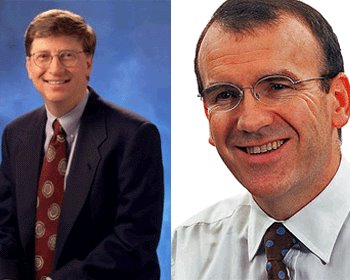
Gates, Leahy to 'sell' London to India


LONDON: Britain?s prime minister in-waiting has recruited Microsoft?s Bill Gates and Tesco boss Sir Terry Leahy to sell London to India in the UK?s first privatised, powerfullypushed, three-year initiative ever to market the country to the world?s emerging economies.

The initiative, unveiled in Parliament by Chancellor Gordon Brown on Tuesday in his 10th budget statement is self-confessedly geared to sell Britain to the emerging East in an aggressive and ambitious way. The India initiative, as it is being dubbed in some quarters, will entail setting up a 12-member International Business Advisory Council that will include Gates, Leahy, Lee Scott, head of the world?s largest retail group Wal-Mart and Li Ka-shing, chairman of Hong Kong telecom giant Hutchison Whampoa.

But experts said the British government could be setting itself up for a potential conflict of interest in recruiting Leahy for the advisory council, now that Tesco is reportedly at an advanced stage in talks with Sunil Mittal?s Bharti Enterprises for a joint venture grocery chain throughout India. Officials said the heavy-weight advisory council will be expected to guide the British government on ?facing up to the economic challenge posed by India and China.?

Brown, who has been Britain?s chancellor for nine years and is expected to replace Tony Blair in the prime ministerial flat at 10, Downing Street, is understood to believe passionately in the need to sell the UK to India and China as the best place to do business.

The new initiative will require the government export promotion agency UK Trade and Investment to aggressively build links with Indian academics and businessmen and lobby for research and development to move to Britain. Brown is understood to believe that the UK needs to focus on ?key markets? such as India to boost London?s standing as a global financial centre in the face of stiff global competition.

India shining: Now in Harvard too

America?s oldest institution of higher learning, Harvard University, will soon have India as a subject. And teachers will include visiting faculty members like Nobel laureate Amartya Sen, Gardiner professor of history at Harvard Sugata Bose and Harvard Business School professor Tarun Khanna.

In an exclusive interview to Times Of India , Harvard University?s outgoing president, Lawrence Summers, said: ??Like people study political science, culture, public health, economics, law and medicine, students in Harvard will now study India as a subject. We are working hard towards building a programme especially on India, the subcontinent and South Asia studies. We want to strengthen and increase our knowledge of the country, which is fast becoming a super-power.??

??I want to start programmes whereby students from Harvard can study in Indian universities and vice versa. I also want to start exchange programmes between business and public health experts in US and India,?? he added.

Summers is a renowned economist who was the treasury secretary under Bill Clinton.

In Delhi after having travelled to Rajasthan and Agra, Summers ? who will deliver the Golden Jubilee celebration lecture of the All India Institute of Medical Sciences on Wednesday ? said he would discuss with his peers on his return to US about India?s tremendous emergence as an economic power.

Summers will also seek ways to deepen the connection between Harvard and Indian universities.

Summers, whose tenure as president of Harvard will be the briefest in its 140-year history, received his bachelor?s degree in economics at MIT in 1975 and PhD at Harvard in 1982. He was appointed president of the university in 2001, making him only the second MIT teacher to become Harvard president.

But it was his candour and brute honesty that some say cost him the job. His January 14 address that supposedly suggested that women have less aptitude than men in science and maths received a lot of flak leading to a vote of no-confidence against him by the faculty of arts and sciences, Harvard?s largest division.

Following this, Summers resigned from his chair. He will remain president till June 30 following which he will serve as a professor in Harvard. Derek Bok, the university?s president from 1971 to 1991, will serve as interim president.