Thursday, January 12, 2006

Chhath

 
 Posted by Picasa

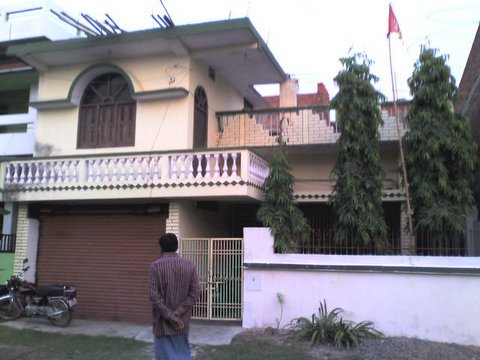
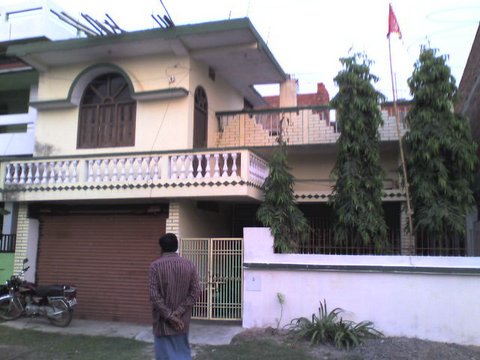
My Wifes School

 
 Posted by Picasa
THEME ARTICLE

The Amul Story


Every day Amul collects 447,000 litres of milk from 2.12 million farmers (many illiterate), converts the milk into branded, packaged products, and delivers goods worth Rs 6 crore (Rs 60 million) to over 500,000 retail outlets across the country.

Its supply chain is easily one of the most complicated in the world. How do managers at Amul prevent the milk from souring?

Walk in to any Amul or Gujarat Cooperative Milk Marketing Federation (GCMMF) office, and you may or may not see a photograph of Mahatma Gandhi, but you will certainly see one particular photograph. It shows a long line of Gujarati women waiting patiently for a union truck to come and collect the milk they have brought in shining brass matkas.

The picture is always prominently displayed. The message is clear: never forget your primary customer. If you don't, success is certain. The proof? A unique, Rs 2,200 crore (Rs 22 billion) enterprise.

Organization structure

It all started in December 1946 with a group of farmers keen to free themselves from intermediaries, gain access to markets and thereby ensure maximum returns for their efforts.

Based in the village of Anand, the Kaira District Milk Cooperative Union (better known as Amul) expanded exponentially. It joined hands with other milk cooperatives, and the Gujarat network now covers 2.12 million farmers, 10,411 village level milk collection centers and fourteen district level plants (unions) under the overall supervision of GCMMF.

There are similar federations in other states. Right from the beginning, there was recognition that this initiative would directly benefit and transform small farmers and contribute to the development of society.

Markets, then and even today are primitive and poor in infrastructure. Amul and GCMMF acknowledged that development and growth could not be left to market forces and that proactive intervention was required. Two key requirements were identified.

The first, that sustained growth for the long term would depend on matching supply and demand. It would need heavy investment in the simultaneous development of suppliers and consumers.

Second, that effective management of the network and commercial viability would require professional managers and technocrats.

To implement their vision while retaining their focus on farmers, a hierarchical network of cooperatives was developed, which today forms the robust supply chain behind GCMMF's endeavors. The vast and complex supply chain stretches from small suppliers to large fragmented markets.

Management of this network is made more complex by the fact that GCMMF is directly responsible only for a small part of the chain, with a number of third party players (distributors, retailers and logistics support providers) playing large roles.

Managing this supply chain efficiently is critical as GCMMF's competitive position is driven by low consumer prices supported by a low cost system.

Developing demand

At the time Amul was formed, consumers had limited purchasing power, and modest consumption levels of milk and other dairy products. Thus Amul adopted a low-cost price strategy to make its products affordable and attractive to consumers by guaranteeing them value for money.

Introducing higher value products

Beginning with liquid milk, GCMMF enhanced the product mix through the progressive addition of higher value products while maintaining the desired growth in existing products.

Despite competition in the high value dairy product segments from firms such as Hindustan Lever, Nestle and Britannia, GCMMF ensures that the product mix and the sequence in which Amul introduces its products is consistent with the core philosophy of providing milk at a basic, affordable price.

The distribution network

Amul products are available in over 500,000 retail outlets across India through its network of over 3,500 distributors. There are 47 depots with dry and cold warehouses to buffer inventory of the entire range of products.

GCMMF transacts on an advance demand draft basis from its wholesale dealers instead of the cheque system adopted by other major FMCG companies. This practice is consistent with GCMMF's philosophy of maintaining cash transactions throughout the supply chain and it also minimizes dumping.

Wholesale dealers carry inventory that is just adequate to take care of the transit time from the branch warehouse to their premises. This just-in-time inventory strategy improves dealers' return on investment (ROI). All GCMMF branches engage in route scheduling and have dedicated vehicle operations.

Umbrella brand

The network follows an umbrella branding strategy. Amul is the common brand for most product categories produced by various unions: liquid milk, milk powders, butter, ghee, cheese, cocoa products, sweets, ice-cream and condensed milk.

Amul's sub-brands include variants such as Amulspray, Amulspree, Amulya and Nutramul. The edible oil products are grouped around Dhara and Lokdhara, mineral water is sold under the Jal Dhara brand while fruit drinks bear the Safal name.

By insisting on an umbrella brand, GCMMF not only skillfully avoided inter-union conflicts but also created an opportunity for the union members to cooperate in developing products.

Managing the supply chain

Even though the cooperative was formed to bring together farmers, it was recognized that professional managers and technocrats would be required to manage the network effectively and make it commercially viable.

Coordination

Given the large number of organizations and entities in the supply chain and decentralized responsibility for various activities, effective coordination is critical for efficiency and cost control. GCMMF and the unions play a major role in this process and jointly achieve the desired degree of control.

Buy-in from the unions is assured as the plans are approved by GCMMF's board. The board is drawn from the heads of all the unions, and the boards of the unions comprise of farmers elected through village societies, thereby creating a situation of interlocking control.

The federation handles the distribution of end products and coordination with retailers and the dealers. The unions coordinate the supply side activities.

These include monitoring milk collection contractors, the supply of animal feed and other supplies, provision of veterinary services, and educational activities.

Managing third party service providers

From the beginning, it was recognized that the unions' core activity lay in milk processing and the production of dairy products. Accordingly, marketing efforts (including brand development) were assumed by GCMMF. All other activities were entrusted to third parties. These include logistics of milk collection, distribution of dairy products, sale of products through dealers and retail stores, provision of animal feed, and veterinary services.

It is worth noting that a number of these third parties are not in the organized sector, and many are not professionally managed with little regard for quality and service.

This is a particularly critical issue in the logistics and transport of a perishable commodity where there are already weaknesses in the basic infrastructure.

Establishing best practices

A key source of competitive advantage has been the enterprise's ability to continuously implement best practices across all elements of the network: the federation, the unions, the village societies and the distribution channel.

In developing these practices, the federation and the unions have adapted successful models from around the world. It could be the implementation of small group activities or quality circles at the federation. Or a TQM program at the unions. Or housekeeping and good accounting practices at the village society level.

More important, the network has been able to regularly roll out improvement programs across to a large number of members and the implementation rate is consistently high.

For example, every Friday, without fail, between 10.00 a.m. and 11.00 a.m., all employees of GCMMF meet at the closest office, be it a department or a branch or a depot to discuss their various quality concerns.

Each meeting has its pre-set format in terms of Purpose, Agenda and Limit (PAL) with a process check at the end to record how the meeting was conducted. Similar processes are in place at the village societies, the unions and even at the wholesaler and C&F agent levels as well.

Examples of benefits from recent initiatives include reduction in transportation time from the depots to the wholesale dealers, improvement in ROI of wholesale dealers, implementation of Zero Stock Out through improved availability of products at depots and also the implementation of Just-in-Time in finance to reduce the float.

Kaizens at the unions have helped improve the quality of milk in terms of acidity and sour milk. (Undertaken by multi-disciplined teams, Kaizens are highly focussed projects, reliant on a structured approach based on data gathering and analysis.) For example, Sabar Union's records show a reduction from 2.0% to 0.5% in the amount of sour milk/curd received at the union.

The most impressive aspect of this large-scale roll out is that improvement processes are turning the village societies into individual improvement centers.

Technology and e-initiatives

GCMMF's technology strategy is characterized by four distinct components: new products, process technology, and complementary assets to enhance milk production and e-commerce.

Few dairies of the world have the wide variety of products produced by the GCMMF network. Village societies are encouraged through subsidies to install chilling units. Automation in processing and packaging areas is common, as is HACCP certification. Amul actively pursues developments in embryo transfer and cattle breeding in order to improve cattle quality and increases in milk yields.

GCMMF was one of the first FMCG (fast-moving consumer goods) firms in India to employ Internet technologies to implement B2C commerce.

Today customers can order a variety of products through the Internet and be assured of timely delivery with cash payment upon receipt.

Another e-initiative underway is to provide farmers access to information relating to markets, technology and best practices in the dairy industry through net enabled kiosks in the villages.

GCMMF has also implemented a Geographical Information System (GIS) at both ends of the supply chain, i.e. milk collection as well as the marketing process.

Farmers now have better access to information on the output as well as support services while providing a better planning tool to marketing personnel.

(Source Rediff.com & The Smart Manager)

Saturday, January 07, 2006

Even Lohiaites are learning

Home > Columns


NATIONAL INTEREST


Even Lohiaites are learning


And you thought Buddha was the only one to let reforms sweep his ideological cobwebs away; look at latest converts


SHEKHAR GUPTA


Posted online: Saturday, January 07, 2006 at 0000 hours IST


If, like this writer, you too are a believer in economic reform leading to free markets, shrinking of the state’s role in economics and unshackling India’s creative and entrepreneurial energies, and are dismayed at the road-blocks and rollbacks at the national level, look at some of our states for the good news. Or rather look at what some of our state-level politicians are doing, and the picture won’t look so bad. And I am not talking only about Buddhadeb Bhattacharjee.

The cause for this cheer comes from a category of politicians you would last expect to break into headlines with their reformist actions. The Lohiaites, over the decades, have been the most retrograde of all socialists, serving a murderous cocktail of pseudo-socialism and pseudo-nationalism. But today, the leading lights of that uniquely Indian, or rather Hindi heartland, faith are breaking away from that past. The Lohiaites have been one of the main causes, and also the biggest beneficiaries, of the Congress party’s decline in its traditional strongholds. Between Bihar and Uttar Pradesh they control twice as much political territory. So far they had resisted the winds of change even more stubbornly than the Left. But the picture is changing now, and changing for the better.


I have maintained for a long time that among the last sectors to be reformed in India will be the railways and real estate. That is because of the great political vested interest in discretionary powers, patronage and, consequently, the scope for money-making both provide. That is why Laloo Yadav’s stint in the rail ministry has been such a pleasant surprise. Please do not be blinded for one moment by his obstinate refusal (so far) to increase passenger tariffs, or inconsequential populism like promoting milk, lassi and earthen kulhads in his trains. One look at the railways’ financial performance, even in two years of rising fuel prices and increased competition from truckers on rapidly improving highways, and you know there is a good news story in the making.


THE cynical explanation, of course, is that just because Laloo has been so embroiled in Bihar politics, two elections and his court cases, he may not have had any time for his ministry and so its officials have been free to do the good things. But that is not how things work in our system where bureaucracies tend to be even more possessive of state power and control than politicians. In fact, no reform ever takes place unless pushed and supported vigorously by the political leadership. Ask any senior member of the Cabinet and he will tell you Laloo has been a particularly good minister, particularly on economic issues. He has almost never blocked any reformist decision and has taken a very constructive view on new ideas of public-private partnerships, special purpose vehicles (SPVs), even outsourcing of services, all things that Rail Bhavan bureaucrats would normally abhor.

That is why my most cheerful headline in a long time is Laloo opening up the railways container business to the private sector. Sure enough, he had promised this in the last railways budget. But so did Chidambaram promise 49 per cent foreign equity in insurance in his 2004 budget and now nobody is even talking about it. The real test is not making reformist promises, but in delivery.

Similarly his fellow Lohiaite (though now political adversary) Nitish Kumar has started his innings on a reformist note entirely unfamiliar, and unexpected in Bihar, and I am not talking of his television commercials soliciting private investments in his state. One of his first actions has been to unbundle his completely moribund electricity board into four zonal corporations. As is to be expected, his unions have threatened to go on strike. But some day, somebody, had to bell that cat in a state where a majority of the villages are not yet electrified and where the electricity board makes a Rs 3.5-crore loss per day. It is early days yet, but to see his initial actions in perspective you have to consider the fact that chief ministers of at least two major Congress-run states, Punjab and Kerala, have not yet dared to do this.

My third cheering story of the week did not even make front-page headlines. I found it buried on one of the commodity pages of Business Standard this Thursday and from my reading at least it seemed as if the reporter had missed the point a bit. The story complained that government-owned sugar mills were struggling to get steady cane supplies because private companies in the state were offering prices higher than the state-mandated minimum support price of Rs 113 per quintal. Some private companies, the report said, were offering up to 15 rupees more than that. Some were even luring the farmer with freebies like tins of desi ghee and sacks of DAP fertiliser (needed in large amounts in this, the rabi wheat season).

NOW this is in a state that was notorious for starving sugarcane farmers by delaying payment for their supplies to its own sugar mills for years together. In fact it was in response to this that Rahul Gandhi had made his maiden intervention in the Lok Sabha to get the cane farmers’ “arrears” released. If in that very state the farmers are now not merely being paid on time, but paid more than the minimum support price and also wooed with freebies by private companies, isn’t that a story of reform?

Whatever else you may say about the Samajwadi Party government and the Mulayam Singh Yadav-Amar Singh combine, their basic approach to the sugar business has been reformist. Private sugar mills have blossomed and instead of begging, pleading, agitating, blocking roads and burning buses to get his own dues, the farmer is now being wooed as a supplier crucial to the sugar business. Now if that isn’t the very definition of reform in agriculture, what is?

There will be crony capitalism as long as there are politicians and businessmen. No politician in India can claim sainthood on that. But the test is, what does that cronyism yield. Even under the darkest-sounding Lohiaites, Uttar Pradesh has persisted with power reform, riding roughshod over the unions (and, of course, you do not expect the Left leaders to go protesting when this happens in non-Congress, non-BJP states, just as they embrace reform so wholeheartedly in states they control). Mulayam is trying to build modern townships, and while allegations of money-making will be there whenever a politician touches real estate, at least he is not muddled in his head as the Congress has been in Mumbai and Delhi on the issue of urban renewal.

These are early days yet and much can go wrong. But what these three Lohiaites are telling you is that, just like Buddhadeb Bhattacharjee, they have discovered that plain, socialist populism and rhetoric has outlived its use-by date. The key to not merely defying anti-incumbency but the very survival in politics, is now performance on issues that matter: bijli, sadak, pani, padhai, naukri. It is not possible to do any of that without reforming. Ideology be damned, it’s the politics, stupid. And you cannot run your politics any more without free market reform, private investment, modernisation. When even the Lohiaites buy that mantra, you know India is on to a good thing.


Write to sg@expressindia.com

Thursday, January 05, 2006

Kalam’s Bihar vision: Progress by 2015

President Agrees to help Nitish Kumar, will again visit state in March to lay down roadmap

PATNA, DECEMBER 30: President A P J Abdul Kalam today presented his vision for Bihar to emerge as a developed state by 2015 and expressed his confidence on Chief Minister Nitish Kumar’s leadership to achieve the goal.
��He has taken the big responsibility of developing Bihar on his shoulders. He seems to be confident, and thereby, I am hopeful that he will succeed,’’ Kalam said while addressing a function after inaugurating a ward at the Mahavir Cancer Institute.

Nitish Kumar, who was also present at the occasion, used the opportunity and sought the President’s guidance for his mission to develop the state, and the latter agreed instantly. The President would visit Bihar in March next year for laying down the roadmap.

We have to work. There is no other alternative. I have requested the President to guide me in Bihar’s development and he has accepted it. He has also accepted my invitation to come here once again in March,’’ Nitish Kumar said while addressing a function along with Kalam in the Patna High Court.

The President arrived here yesterday on a two-day visit. He attended several functions and talked about the country’s as well as Bihar’s development. Bihar Vision: Developed State by 2015—read the concluding portion of his speech during a convocation ceremony of the Patna University.

Stressing the need for the state’s development, the President said that India cannot be emerged as a developed country till Bihar is developed.

In Darbhanga, Kalam said, ��According to economists, our country should grow at a rate of 10 per cent per annum for a decade to uplift 250 million people living the below poverty line. Our GDP is growing at over seven per annum on an average.’’ “Bihar’s fertile soil can be a great contributor in achieving the aim of $1 billion export in medicinal, floriculture and aromatic plants and even orchids,’’ he said.

On crime and corruption, he said that it is very shameful when India is referred to as a country entrapped by corruption. ��Children could be a great force in wiping out corruption from the country,’’ Kalam added.

Nitish Kumar refuses to wear gown at convocation

PATNA: Bihar Chief Minister Nitish Kumar on Friday refused to be dressed in a gown for the convocation of Patna University, addressed by President A.P.J. Abdul Kalam, as a ��mark of protest’’.

��I was asked by the PU officials to put on the gown but I did not not entertain it as a protest,’’ Kumar said. ��But you should know why I did not wear the gown though even dignitaries on the dais including President, Governor and my ministerial colleague Brishen Patel wore it. I, too, had dreamt of wearing a gown at a convocation when I graduated, but never got an opportunity then.’’ —PTI

Tuesday, December 27, 2005

Indians Find They Can Go Home Again

Indians Find They Can Go Home Again


E-Mail This
Printer-Friendly
Single-Page
Reprints
Save Article
By SARITHA RAI
Published: December 26, 2005
BANGALORE, India - Standing amid the rolling lawns outside his four-bedroom villa, Ajay Kela pondered his street in the community of Palm Meadows. One of his neighbors recently returned to India from Cupertino, Calif., to run a technology start-up funded by the venture capital firm Kleiner, Perkins, Caufield & Byers.
Skip to next paragraph

Namas Bhojani for The New York Times
Ajay Kela with his son, Ankur, and daughter, Payal. The family returned to India from California.
Across the street from Mr. Kela is another Indian executive, this one from Fremont, Calif., who works with the outsourcing firm Infosys Technologies. On the other side is the top executive of Cisco Systems in India, who returned here after decades in the Bay Area and New York.
Also on the block is a returnee from the United Kingdom, who heads the technology operations of Deutsche Bank.
Mr. Kela's neighborhood is just a small sample of a reverse brain drain benefiting India. The gated community of Palm Meadows in the Whitefield suburbs, and many others in the vicinity, with names like Ozone and Lake Vista, are full of Indians who were educated in and worked in the United States and Europe, but who have been lured home by the surging Indian economy and its buoyant technology industry.
"Nothing unusual about this lane at all," said Mr. Kela, 48, who moved from Foster City, Calif., to Palm Meadows last year and is president of the outsourcing firm Symphony Services, which is based in Palo Alto, Calif.
Nasscom, a trade group of Indian outsourcing companies, estimates that 30,000 technology professionals have moved back in the last 18 months. Bangalore, Hyderabad and the suburbs of Delhi are becoming magnets for an influx of Indians, who are the top-earning ethnic group in the United States. These cities, with their Western-style work environment, generous paychecks and quick career jumps, offer the returnees what, until now, they could only get in places like Palo Alto and Boston.
And now they offer something else: a housing boom. Homes have tripled in value in Palm Meadows over the last 12 months, and rents have quadrupled. "Expatriates are returning because India is hot," said Nandan Nilekani, chief executive of Infosys Technologies, India's second-largest outsourcing firm, which recruited 25 returnees from top American schools for its 100-seat summer internship this year. "There is an increasing feeling that significant action in the technology industry is moving to India," he said.
While most returnees are first-generation expatriates, second-generation Indians living in the United States are also returning, said Lori Blackman, a recruitment consultant in Dallas. "Among them I sense an altruistic pull to return to India to help build their home country to a greater power than the country had ever hoped to achieve," she said.
But the trend is raising fears among American specialists that it could deplete the United States of scientific talent and blunt its edge in innovation. "The United States will miss the talents of people of Indian origin who return to India," said Brink Lindsey, vice president for research at the Cato Institute in Washington, adding, that the moves could create greater possibilities for trade between the two countries.
For many returnees, the newly challenging work environment in India has tied in neatly with personal reasons for returning, such as raising their children in Indian culture and caring for aging parents.
"When I left India 25 years ago, everybody was headed to the United States," said Mr. Kela, who pursued a Ph.D. at the University of Rochester and stayed two decades, working for companies like General Electric and AutoDesk. For India's best and brightest, a technology or engineering career was an irresistible draw to the United States, even until four or five years ago.
"But now they all want to get on the plane home," said Mr. Kela, who returned with his wife and two children.
Once a regular at Silicon Valley job fairs, trying to woo Indians back home, Mr. Kela no longer needs to sell India. He receives 10 résumés a month from people with decades of work experience in the United States yearning to relocate.
With globalization, many Americans of Indian origin in the high-technology industry are looking at India as a "career-enhancing move," said Anuradha Parthasarathy, the chief executive of Global Executive Talent, a search firm in Menlo Park, Calif., who is swamped by such job-seekers. Many technology companies - multinationals and Indian outsourcing firms as well as start-ups - are eager to hire returnees with Western managerial experience or technology specialization.
Companies based in the United States, like ipValue, a company in Palo Alto that commercializes intellectual assets for large technology companies like British Telecom and the Xerox Corporation, are helping accelerate the trend. When ipValue recently decided to expand its operations, it chose to do so in India.

"We are really betting on the Indian diaspora returning home," said Vincent Pluvinage, its chief executive. The firm just hired a top executive from Oracle to head its Indian operations and expects a third of its 20-member team in India to consist of returnees by January 2006.
The passage back is no longer an ordeal, because much has changed in India. Whereas watching a movie in a dingy hall was once a weekend high point, now fancy multiplexes, bowling alleys and shopping malls offer entertainment, and pizzerias and cafes are ubiquitous at street corners. Indians who once could choose between only two car models and fly a single airline find they have returned to a profusion of choices.
Even as the lifestyle gaps between India and the West have narrowed rapidly, salary differences at top executive levels have virtually disappeared. Annual pay packages of a half-million dollars are common in Bangalore, but even for those taking a pay cut to return home, the lower cost of living balances smaller paychecks. Starting salaries for engineers are about $12,000 in India, versus $60,000 in Silicon Valley.
But relocating is not without its challenges, as Venki Sundaresan, 38, discovered a year ago when, after 15 years abroad, he moved to India with his wife and twin daughters to be the information technology director of Cypress Semiconductor.
In atypical fashion, Mr. Sundaresan scorned the "soft landing" that many returning Indians seek by living in gated communities. Instead, to have the "true Indian experience," the family opted to live in the teeming Indiranagar neighborhood. For his 5-year-old twins, he spurned upmarket international schools popular with other returnees and enrolled them in a neighborhood school. Mr. Sundaresan owns an Indian-made car, a Maruti Baleno.
"We've already driven the Mercedes and the BMW in the United States," he said. "What is the point of dodging around Bangalore's potholes in a limo?"
Living in Palm Meadows, Mr. Kela and his neighbor Sanjay Swamy, 41, who heads the Indian operations of Ketera Technologies, face very little transition anxiety. Mr. Swamy bought and moved into a Palm Meadows villa with his wife, Tulsi, a financial consultant, and 8-year-old son, Ashwin.
The communities buffer returnees from Bangalore's bumper-to-bumper traffic, unpaved sidewalks and swarming neighborhoods. Mr. Kela; his 9-year-old daughter, Payal; and 6-year-old son, Ankur, enjoy riding bikes on weekends, and they often play cricket, which Mr. Kela is passionate about. His daughter is learning the classical Indian dances of Kathak and Bharatanatyam. For Halloween this year, Mr. Kela led his children on a trick-or-treat walk.
Mr. Kela says he misses the freedom to drive anywhere or go on long hikes. Yet, life is comfortable, with two live-in maids, a full-time driver and another on call, all of whom are "outrageously affordable."
His neighbor Mr. Swamy is immersed in building a Silicon Valley-style team in Bangalore, but with some local adjustments. When he learned that the company routinely received calls from prospective fathers-in-law of employees, asking to verify their ages, titles and salary details, Mr. Swamy wrote a memo titled "HR Policy on Disclosing Employee Information to Prospective Fathers-in-Law."
"While I want to be entirely supportive of ensuring that our confidentiality agreement does not result in your missing out on the spouse of your dreams," Mr. Swamy said, "I don't want competitors to use this as a ploy to get at sensitive information."

Thursday, November 24, 2005


MISSION IMPOSSIBLE
By Chandan Mitra

http://www.dailypioneer.com/mission_impossible.asp
There's a very thin line dividing bravado from foolhardiness. Even five full years after I started treading it, I still don't know whether taking over The Pioneer was a courageous act or a demented one. But at least now the story can be told and judgment left to the reader. Yes, it is exactly five years ago that I actually began running this newspaper on my own, although our official anniversary is on May 15.
On May 13, 1998, an interim agreement was reached with the then owners, the ever-magnanimous LM Thapar and his nephew Gautam, according to which if a final deal was struck before May 30, I would bear the costs incurred for keeping the paper running after May 15. If negotiations failed, the Thapars would pay the expenses incurred for a maximum of 15 days after that deadline and then perform euthanasia. In the event, a satisfactory agreement was concluded before the last and final deadline and I signed the papers on the evening of May 25 in the office of Ballarpur Industries' Vice-President SK Khandelwal. However, in accordance with the earlier accord, technically The Pioneer came under my management with effect from May 15, at least as far as paying for it was concerned. It was a hot, mid-summer evening of May 25 that I returned to our office from Thapar House on Janpath Lane, more tired and apprehensive than excited. I remember being greeted at the reception by Lakshmi Iyer (now with India Today) with the unexpected news of my favourite music director Laxmikant's death. That took away whatever little sense of elation I might have felt, although the entire staff assembled to cheer and promptly announce a celebratory party. For me, it was business as usual. After holding the evening news meeting, I set out to write Laxmikant's obituary and reached the Patparganj apartment of present Executive Vice-President Durbar Ganguly for the party well after 10 pm.It took a few days before the enormity of Mission Impossible dawned on me. We had no money in the kitty although the Thapars had been generous to a fault, diverting all advertising dues outstanding to The Pioneer as a loan to its new management. But ad revenue comes in a dribble, expenses happen in a flood. Newsprint had to be purchased, suppliers had to be paid, electric and other routine bills stared us in the face. I had already made it clear to the entire staff in a series of general body meetings held before the transition that salaries would be delayed by a few months. But, still, we had to figure out where this money would come from. The paper had lost over Rs 1 crore every month during 1997-98; monthly revenues never exceeded Rs 30 lakh. From all accounts, it was a hopeless case. But there was grim determination. My senior colleagues Sanjeev Bikhchandani, Bindu and Durbar Ganguly in Delhi and Dipak Mukerji and Uday Sinha in Lucknow shared the dream. We had to succeed; there was no scope for failure. How bad our own resource position was can be gauged by just one instance. It had been agreed that CMYK Printech Ltd. (a non-operational company I bought through the good offices of a friend) would purchase The Pioneer brand for a relatively nominal consideration. When I examined my bank balance, I discovered I was short of this amount. Sanjeev kindly offered to loan me Rs 25,000 so that I could write out a cheque to the Thapars. That left me with just about Rs 10,000 in the bank. For months thereafter, personal friends lent me money to pay house rent and run the kitchen. I still ventured into the Great Unknown.Honestly, though, I never intended to run The Pioneer myself. The buy-out was supposed to be a holding operation till we found a suitable proprietor. The story began on January 17, 1998 when I was called to Mr LM Thapar's Amrita Shergill Marg house for an "important discussion." LMT and Gautam grimly informed me that given the group's financial position and spiralling losses of the paper, it had been decided to close it down. I had an inkling of what was coming in view of the ever-tightening budgets since November 1997. Saddened but not entirely shocked, I asked for the proposed date of closure. The answer left me stunned: It was to be the day after Republic Day, just 10 days away. General elections were due in March with the IK Gujral Government having recently fallen. I pleaded that we be allowed time till after the polls so that I could scout for a buyer. I pointed out that it would be difficult to get any industrialist to bite the bait till the polls were out of the way and some degree of political stability restored. Gautam expressed scepticism, arguing that they had tried hard but the paper's financial track record was too intimidating for anybody to risk buying it. I still persisted, seeking a three-month breather and LMT finally relented sternly telling me he would not wait beyond one month of the results being declared. I agreed gratefully. For more than a week after that I spoke about this to nobody, fearing staff would jump ship in droves and I wouldn't be able to bring out the paper even before it officially closed. The then management led by one Neeran Chibber was, however, overjoyed at the prospect of this historic publication closing down. He was never committed to The Pioneer anyway and eagerly awaited its closure to migrate to a cushy job that had been promised to him. What he did subsequently to his benefactors is another story.So, the news of the paper's impending closure was out in no time, triumphantly broadcast by soulless apparatchiks of the "management". We began hunting for buyers in real earnest with Sanjeev helping me with elaborate project reports, revenue projections and other forms of financial wizardry, none of which I comprehended those days. We met all kinds of prospective buyers ranging from NRI barons to Okhla printing press owners, real estate dealers and self-styled confidants of corporate bigwigs. We were too naĂŻve to realise that all the effort at documentation and presentation of our case was a complete waste of time and energy. Barring one NRI industrialist who later proved to be very helpful, none called us a second time although later they used our acquaintance to seek favours that I indignantly refused. Around April 15, 1998, the Thapars asked me for a progress report and I had to admit drawing a blank. But I continued to plead and got an extension till April 30. Nothing transpired. Two days before that date, senior staff members sought my permission to directly approach LMT. I said I had no face to accompany them, so they were welcome to give it a shot. LMT was moved to grant a further 15 days and that's how May 15 became D-Day.The initial months were so problematic that I don't even recall how they passed. By August, the staff too got restive: Everybody, after all, had families to run and couldn't be expected to live on love, thin air and a sense of Mission Impossible. The Thapars had settled the entire staff's PF, gratuity, closure pay and other allowances. About 29 staffers bid adieu with the generous handshake that left some richer by anything between Rs 5 to 7 lakh. Within a week of taking over, I had to relieve over 100 others in a desperate bid to cut costs. The unionised staff in Lucknow would have nothing of this and I had to succumb to the pressure of employing all of them afresh in CMYK so that The Pioneer could continue to appear without a break. Periodically, I would make rounds of industrialists' offices virtually with a begging bowl, either offering them ownership or shares in the company for a consideration. Some obliged, some politely refused. In August, we barely scraped up enough funds to disburse 15 days' salary. A wave of jubilation swept through the office. Little did they (or even we for that matter) know much worse was to come. In 1999, we failed to pay salaries for five months in a row. The staff still hung on, believing in The Pioneer's destiny. The spirit refused to evaporate. Whenever it threatened to, we replenished it by pooling in for office parties that continued into the wee hours. Friendly MPs and MLAs obliged by allowing us to use their lawns, often joining us in the merriment amid prognostications of doom.What amazed me was some top-notch journalists actually came and joined The Pioneer in full knowledge of the situation. Hiranmay Karlekar and A Surya Prakash were among the notable ones. In 2000, Amit Goel, former corporate bureau chief of The Economic Times, also enrolled in our adventurers' club. Over the years, he helped steady the business with his intimate knowledge of finances and immense goodwill in the corporate world. Meanwhile Durbar Ganguly, who was an investigative reporter with Ananda Bazar Patrika, metamorphosed into one of the city's most successful marketing honchos. Today The Pioneer's advertising revenues, although still insufficient to allow us to increase circulation or visibility, are more than double what they were before 1998.My faith in the old dictum God helps those who help themselves has deepened manifold over these five years. Miraculously, saviours have appeared at the most critical of times. I am acutely aware that canards are frequently spread about the sources of our funding. I wish even half of what I sometimes hear were true, for if it were indeed so, our grind would have been immeasurably lightened. I would never spend sleepless nights wondering how I would repay banks and financial institutions that loaned us money. I can assert with pride that The Pioneer funds itself through revenues generated by advertising and circulation, apart from loans legitimately obtained to tide over cash flow problems. In fact, while the list of defaulters with banks and FIs reads like a Who's Who of Indian industry, despite all the horrific adversities we have faced in the past, The Pioneer has never defaulted, having regularly serviced every loan it has obtained on merit. Some industrialists who have helped The Pioneer have been such thorough gentlemen that to date I have never had to compromise with my conscience as they have not asked for any favours in return. When we ventured into the internet business at the height of the dotcom boom, one businessman invested some money in it which proved to be a turning point for the newspaper. The dotcom bust happened within months. He still laughs over it and remains a close friend. People, I have realised over these gruelling years, are never bad by definition. Be good to them and you bring out their best and vice versa. Decades ago in school we read 'To kill a Mockingbird' as our English Literature text. The moving novel's last line was "Most people are good once you really get to know them." So true! Another turning point came when to our own bewilderment we emerged the highest bidder in the tender for publishing Alliance Air's in-flight magazine last year. Now, Darpan is not just critically acclaimed but has also been placed on board Indian Airlines flights giving it a massive readership, easily crossing 10 million each month.What is it that kept us going through such turbulent times? I don't really know. At least on 10 occasions, I was advised to cut losses, sell out and set myself up as a columnist, TV personality or seek employment with another established group. Several times, I seriously pondered the option, especially when at the end of the first year of our operations we notched up a loss of Rs 2.78 crore without the remotest idea how we would ever cover the deficit. But the loans came just then. Another time, I had virtually made up my mind to sell out only if somebody agreed to just pick up the losses. I even negotiated. But somewhere, it hurt. I felt humiliated at the thought of giving up. When I still go out myself seeking ads for The Pioneer I never feel any sense of shame or dishonour because we are still waging a war to save an institution. Purists may disagree, but I must honestly admit that at times old-fashioned ideas of the strict line between editorial virginity and commercial promiscuity need to be crossed for the greater good. But quitting after an admission of failure? Going back to taking dictations from the management? Letting this historic publication die or fall into avaricious hands? Pleading for somebody to be sacked or employed? The old adage of a hungry, free bird as opposed to its well-fed counterpart in a golden cage keeps us going.Our readers have been The Pioneer's greatest source of strength. We did not reduce our cover price of Rs 2 when both the market leaders cut theirs to Re 1. And we offered just 16 pages against their 32. Still, we did not lose even one subscriber. For a significant number in Delhi and Lucknow, The Pioneer remains the paper of choice for its quality, not raddi value. Arguably, we cannot afford the latest technology; nor can we hire enough journalists or marketing staff at prevailing industry salaries. Each time there is a shake-out in the media with the launch of new TV channels or publications, we lose good people. But we haven't lost the will to rebuild. And I know that as long as we don't give up the battle, nothing can stop The Pioneer from pulling through in yet another miracle. Old-timers in the paper recall folklore about The Pioneer having shifted its headquarters in 1941 from Allahabad to Lucknow without even a day's break of publication. More than 60 years ago, given the state of technology then, it was nothing short of a miracle. I believe we are heirs to that legacy and destiny has bestowed upon us the responsibility of keeping this 139-year-old institution going. As I said quoting Iqbal at the tenth anniversary celebrations of the paper's Delhi edition on December 14, 2002: "Kuchh baat hai ki hasti mit-ti nahin hamari!" With your unstinted patronage, dear reader, it never will!
The Bihar Times and the birth of Bihar
Dr Suresh Nandan Sinha,Bihar Times.
The state of Bihar owes a great deal for its birth and development to the newspaper 'The Bihar Times' whose publication started in the year 1894 to give a boost to the demand for the separation of Bihar from Bengal which comprised of the the states of Bihar, West Bengal, Orissa and Assam. In this congeries, Bihar was a non-entity as all attention were given to Bengal, Calcutta, being the centre of administration.
After the decisive battle of Buxar, the Emperor, Shah Alam of Delhi throne transferred the diwani of Bengal, Bihar and Orissa to East India Company whose centre of activities was Calcutta. As such, there was little education in Bihar and the State was socially, educationally and economically backward and exploited.
It was in the year 1889 that Late Sachchida Nand Sinha went to England for doing Bar-at- Law. There, he became a butt of ridicule when he called himself a Bihari, coming from Bihar which had no existence on the map of the country. This humiliating experience provided a spur to Dr Sinha to strive for a niche and separate identity for the state of Bihar. In 1893, having successfully completed his Bar-at-Law, he returned to Patna and took a vow to rest content only after making Bihar-a separate administrative unit. But the struggle for Bihar like all other struggles also brought stiff opposition in its wake as volatile Bengal was not agreeable to separate identity for Bihar.
Nevertheless, the idea for separation of Bihar started taking shape and for spreading it and eliciting public support in its favour, publication of a weekly journal \'\'Bihar Times\'\' was started in the year 1894 with the support and cooperation of Nandkishore Lal of Gaya, Rai Bahadur Shreekrishna Sahay and famous journalist, Mahesh Narain who became its editor. In the initial years, this weekly journal exclusively devoted itself to the struggle for separation of Bihar from Bengal and this movement became widespread. After sometime, Dr S N Sinha and Nandkishore Lal submitted a memorandum on behalf of many local institutions to Lt governor Alexander Mackenji for separation of Bihar from Bengal. In 1906, Rajendra Prasad who was secretary of \'Bihari Club\' of Calcutta, organised a conference of Bihari students at Patna in consultation with Sachchida Nand Sinha and Mahesh Narain. \r\nIn this conference, a student committe was formed to give fillip to the separatist movement and thus it gained great momentum. In 1907, Mahesh Narayan died but the movement got backing of Maulana Mazrul Haque, Ali Imam, Rai Bahadur Brahmdeo Prasad, Hasan Imam. With their help in 1908, the first convention of Bihar State Sammelan was held at Patna in which a resolution was unanimously passed to separate Bihar from Bengal. The same demand was repeated in its second convention at Bhagalpur in 1909. After a few months of this convention, Dr \r\nS.N.Sinha and Mazrul Haque were elected members of Imperial Legislative Council from the quota of Bengal Legislative Council and Muslim minority seat. By this time, the separatist movement had got recognition in the eyes of British administration. It was at that time that the then law member \r\nS.P.Sinha resigned from his post and Vice-Roy Lord Minto made Consultation with Dr Sinha to fill up the said post. Dr Sinha suggested the name of Ali Imam who was appointed Law member in place of S.P.Sinha. Ali Imam proved very helpful in furthering and giving legal boost to the idea of separation. In 1911, in Delhi Durbar, George V was going to be declared Emperor of \r\n",1]
);
//-->

Nevertheless, the idea for separation of Bihar started taking shape and for spreading it and eliciting public support in its favour, publication of a weekly journal ''Bihar Times'' was started in the year 1894 with the support and cooperation of Nandkishore Lal of Gaya, Rai Bahadur Shreekrishna Sahay and famous journalist, Mahesh Narain who became its editor. In the initial years, this weekly journal exclusively devoted itself to the struggle for separation of Bihar from Bengal and this movement became widespread. After sometime, Dr S N Sinha and Nandkishore Lal submitted a memorandum on behalf of many local institutions to Lt governor Alexander Mackenji for separation of Bihar from Bengal. In 1906, Rajendra Prasad who was secretary of 'Bihari Club' of Calcutta, organised a conference of Bihari students at Patna in consultation with Sachchida Nand Sinha and Mahesh Narain.
In this conference, a student committe was formed to give fillip to the separatist movement and thus it gained great momentum. In 1907, Mahesh Narayan died but the movement got backing of Maulana Mazrul Haque, Ali Imam, Rai Bahadur Brahmdeo Prasad, Hasan Imam. With their help in 1908, the first convention of Bihar State Sammelan was held at Patna in which a resolution was unanimously passed to separate Bihar from Bengal. The same demand was repeated in its second convention at Bhagalpur in 1909. After a few months of this convention, Dr S.N.Sinha and Mazrul Haque were elected members of Imperial Legislative Council from the quota of Bengal Legislative Council and Muslim minority seat. By this time, the separatist movement had got recognition in the eyes of British administration. It was at that time that the then law member S.P.Sinha resigned from his post and Vice-Roy Lord Minto made Consultation with Dr Sinha to fill up the said post. Dr Sinha suggested the name of Ali Imam who was appointed Law member in place of S.P.Sinha. Ali Imam proved very helpful in furthering and giving legal boost to the idea of separation. In 1911, in Delhi Durbar, George V was going to be declared Emperor of
\' Bihar Times\' played its role effectively, true to its purpose, in educating the masses to struggle for creation of Bihar. This journal took up the cause of Bihar and nourished the idea that the separation of Bihar from Bengal would provide the necessary relief to the Bengal administration which will be convenient to Govt of India and in due course \'Bihar Times\' influenced other newspapers of neighbouring states also in moulding them towards the idea of creation of Bihar. With the death of Mahesh Narain, it got a big jolt, nevertheless, the paper continued to come out and much later it took the form of \'Motherland\' and it still continues to serve the state of Bihar in its new avatar on internet and thus the history of this paper originates from 19th century and traversing its long journey through 20th century, it will now enter the 21st century after a year with a renewed and added zeal to serve the friends of Bihar in India and abroad in the new age of information technology. \r\n\r\nGrowth in Western India Reduces Poverty in Bihar\r\n\r\n\r\n\r\n\r\nGerry RodgersAn eminent economist, he worked extensively on poverty & employment in Bihar, currenty working as director(training) ILO,Geneva.\r\n",1]
);
//-->
India.On this occasion, the Secretary of India affairs wrote a letter to Govt of India in which he emphasised the demand of the Biharees terming them''healthy and law-abiding who were different to Bengalese in their origin, language, propensities, land and thinking.'' It was also communicated that on 12th December, a Lt governor in council separately for Bihar and Orissa would be appointed. This was announced in the Delhi Durbar to everybody's satisfaction amidst great rejoicings. Thus Bihar and Orissa became separate administrative unit under Lt Governor in council from 1st April,1912. In due course, Orissa was also separated from Bihar from 1st April,1936.
' Bihar Times' played its role effectively, true to its purpose, in educating the masses to struggle for creation of Bihar. This journal took up the cause of Bihar and nourished the idea that the separation of Bihar from Bengal would provide the necessary relief to the Bengal administration which will be convenient to Govt of India and in due course 'Bihar Times' influenced other newspapers of neighbouring states also in moulding them towards the idea of creation of Bihar. With the death of Mahesh Narain, it got a big jolt, nevertheless, the paper continued to come out and much later it took the form of 'Motherland' and it still continues to serve the state of Bihar in its new avatar on internet and thus the history of this paper originates from 19th century and traversing its long journey through 20th century, it will now enter the 21st century after a year with a renewed and added zeal to serve the friends of Bihar in India and abroad in the new age of information technology.
Growth in Western India Reduces Poverty in Bihar
Gerry RodgersAn eminent economist, he worked extensively on poverty & employment in Bihar, currenty working as director(training) ILO,Geneva.
\r\nIn April we returned to Mazgama and Pokharia, two villages in Purnia District, for the first time since 1981. It was our third visit. In 1970 we had found these villages deep in poverty, with poor links to the outside world, and benefitting little from government programmes. Still, there was hope for the future. The Kosi canal irrigation system was under construction across village lands, and the increasing availability of high yielding seeds offered possibilities for agricultural development. \r\nBut in 1981, we found the situation little changed. The Kosi canal system provided no irrigation water and increased vulnerability to flood. Agricultural development was limited. Some tubewell irrigation had begun, but the main pattern was one of stagnation. Incomes were if anything even lower than in 1970; certainly wages had declined. A few workers were seeking employment outside the village - earthwork in Assam, for instance - but most remained dependent on local agriculture. Levels of mortality among agricultural labourers were high. As we approached the villages in April 1999, signs of change were evident. At the village itself, the first stop was a cluster of shops on the road, including a small pharmacy, a cycle repair shop and some general stores. This was new, a sign that there was money to spend in an economy which was hardly monetized at all before. We talked to villagers, and returned to households we had visited before to find out how their lives had changed. The pattern soon became clear. Agriculture in the villages had improved a little - tubewell irrigation had spread, and more fertilizer-intensive crops were being grown. But the change was small, given that 18 years had passed, hardly sufficient to keep pace with population growth and certainly not enough to explain the apparently healthy local economy. Some non-agricultural activities had also emerged, mainly in commerce and transport, but they appeared to be a consequence of increased income rather than a cause. \r\n",1]
);
//-->

In April we returned to Mazgama and Pokharia, two villages in Purnia District, for the first time since 1981. It was our third visit. In 1970 we had found these villages deep in poverty, with poor links to the outside world, and benefitting little from government programmes. Still, there was hope for the future. The Kosi canal irrigation system was under construction across village lands, and the increasing availability of high yielding seeds offered possibilities for agricultural development.
But in 1981, we found the situation little changed. The Kosi canal system provided no irrigation water and increased vulnerability to flood. Agricultural development was limited. Some tubewell irrigation had begun, but the main pattern was one of stagnation. Incomes were if anything even lower than in 1970; certainly wages had declined. A few workers were seeking employment outside the village - earthwork in Assam, for instance - but most remained dependent on local agriculture. Levels of mortality among agricultural labourers were high. As we approached the villages in April 1999, signs of change were evident. At the village itself, the first stop was a cluster of shops on the road, including a small pharmacy, a cycle repair shop and some general stores. This was new, a sign that there was money to spend in an economy which was hardly monetized at all before. We talked to villagers, and returned to households we had visited before to find out how their lives had changed. The pattern soon became clear. Agriculture in the villages had improved a little - tubewell irrigation had spread, and more fertilizer-intensive crops were being grown. But the change was small, given that 18 years had passed, hardly sufficient to keep pace with population growth and certainly not enough to explain the apparently healthy local economy. Some non-agricultural activities had also emerged, mainly in commerce and transport, but they appeared to be a consequence of increased income rather than a cause.
The main factor in the change was a massive increase in migration. Villagers were migrating, not permanently, but for 2, 4 or 6 months at a time, to work in Delhi, Punjab, Western UP or Haryana. Migration of this sort is nothing new in Bihar, but the scale had changed. Now ,in virtually every labour family with an able-bodied male member, there was at least one migrant, often 2 or 3. In Western India ,the migrants could earn double the local wages, and their remittances and savings were pouring thousands of rupees into the local economy. Local wages had risen sharply as well, responding to the competition from the national labour market. As a result, the incomes and consumption levels of the poorest groups - agricultural labour households - had risen markedly. \r\nSo poverty in these villages had declined, and on the whole it was the poorest groups who benefitted most. It was a welcome surprise. But the improvements stemmed from economic growth which was occurring, not in Bihar, but elsewhere in India. Whether these changes will lead to sustainable development locally will depend on whether these monetary flows can find their way into productive investment. \r\nJanine Rodgers Gerry Rodgers \r\nBihar Society: Motion Sans Vision\r\n\r\n\r\n\r\n\r\nDr Shaibal GuptaEconomist and member secretary, ADRI, Patna\r\n\r\nBihar is geographically and demographically equivalent to France and Germany. In terms of mineral resources, it is considered to be the Ruhr of India. However, earlier policy of freight equalization had spelled doom for industrialization of the state. On the other hand, the fertile soil of Bihar plains with abundant ground and river water could have been delight of any development strategist. Yet, Bihar remains one of the most backward economic tracts. Paradoxically, however, in spite of extreme poverty, the sale of Maggi (a food product of multinational Nestle) in Patna is second highest after Delhi; different varieties of chocolates vie with \'medicine\' to record highest sale in the state, or another multinational, manufacturing \'chewing gum\', appoints a regional manager with an army of subordinates to look after its burgeoning sale even in rural areas of Bihar. \r\n",1]
);
//-->

The main factor in the change was a massive increase in migration. Villagers were migrating, not permanently, but for 2, 4 or 6 months at a time, to work in Delhi, Punjab, Western UP or Haryana. Migration of this sort is nothing new in Bihar, but the scale had changed. Now ,in virtually every labour family with an able-bodied male member, there was at least one migrant, often 2 or 3. In Western India ,the migrants could earn double the local wages, and their remittances and savings were pouring thousands of rupees into the local economy. Local wages had risen sharply as well, responding to the competition from the national labour market. As a result, the incomes and consumption levels of the poorest groups - agricultural labour households - had risen markedly.
So poverty in these villages had declined, and on the whole it was the poorest groups who benefitted most. It was a welcome surprise. But the improvements stemmed from economic growth which was occurring, not in Bihar, but elsewhere in India. Whether these changes will lead to sustainable development locally will depend on whether these monetary flows can find their way into productive investment. Janine Rodgers Gerry Rodgers
Bihar Society: Motion Sans Vision
Dr Shaibal GuptaEconomist and member secretary, ADRI, Patna
Bihar is geographically and demographically equivalent to France and Germany. In terms of mineral resources, it is considered to be the Ruhr of India. However, earlier policy of freight equalization had spelled doom for industrialization of the state. On the other hand, the fertile soil of Bihar plains with abundant ground and river water could have been delight of any development strategist. Yet, Bihar remains one of the most backward economic tracts. Paradoxically, however, in spite of extreme poverty, the sale of Maggi (a food product of multinational Nestle) in Patna is second highest after Delhi; different varieties of chocolates vie with 'medicine' to record highest sale in the state, or another multinational, manufacturing 'chewing gum', appoints a regional manager with an army of subordinates to look after its burgeoning sale even in rural areas of Bihar.
Nowadays, even in rural areas, no social ceremony of even a modest household is complete without soft drinks and video recording. In case Bihar faces \'food and drinking water scarcity\', Rabari Devi can say without compunction, "If there is no bread and water.......eat chocolates and drink Pepsi". In fact, foodgrain production, recording nearly national growth rate, has resulted into almost 25 percent annual growth of deposits of rural banks and opening of retail outlet of corporate organisations in the muffossil area. This incongruous economic spectacle is essentially the result of distorted and dependent capitalism that had developed in the state. However the economic spectrum that has unfolded in Bihar is a consequence of many political factors. Over and above, the recent massacres in central plain have assumed the diabolical dimensions. \r\nIt is a tragic irony that when most of the states are awaiting the new century and millennium by strengthening the foundation of knowledge capital, Bihar is increasingly getting into the quagmire of ancient gladiatorial society. \r\nPolitics in Bihar is significantly determined by the agrarian relation, essentially scripted by Lord Cornwallis, through the permanent settlement in 1793. Being the important bastion of Sepoy Mutiny in 1857,Bihar was subjected to extreme repression after the failure of the revolt. Thus, this area developed insularity and resistance to ideas related to science, education, culture, modernity etc, over a period of time. For a long time it was a part of the catchment area of Hindu orthodoxy of Varanasi, symbolized through the Maharaja, Brahmin Pundits and Bhartendu Harischandra, father of modern Hindi and ideologue of merchant aristocracy. \r\nHindi heartland did not experience social movement in the absence of an \'intermediate identity\' of regional subnationalism.Capital transformation in agriculture along with \'Sanskritisation\' had resulted into further consolidation of either \'caste profile\' or \'Hindutva identity\'. \r\nNot that emergence of Karpuri Thakur and subsequently, Laloo Prasad is a replication of the phenomenon of Charan Singh in UP or Devraj Urs of Karnataka, but their political resonance at the central level is similar. But, what one could see at the national level may not be true in Bihar, where state is either slowly \' withering away from within, unable to\' mediate\' between highly conflicting interest groups and maintain even a modicum of governance. One could characterize weakening of the state through a number of indicators; but the state of public finance probably tells the story in most convincing manner. Out of its total annual budget of Rs. 18,503 crore (in 1999-2000), no less than Rs. 3,519 crore are to be spent on repayment of loan and interest (\r\n",1]
);
//-->

Nowadays, even in rural areas, no social ceremony of even a modest household is complete without soft drinks and video recording. In case Bihar faces 'food and drinking water scarcity', Rabari Devi can say without compunction, "If there is no bread and water.......eat chocolates and drink Pepsi". In fact, foodgrain production, recording nearly national growth rate, has resulted into almost 25 percent annual growth of deposits of rural banks and opening of retail outlet of corporate organisations in the muffossil area. This incongruous economic spectacle is essentially the result of distorted and dependent capitalism that had developed in the state. However the economic spectrum that has unfolded in Bihar is a consequence of many political factors. Over and above, the recent massacres in central plain have assumed the diabolical dimensions.
It is a tragic irony that when most of the states are awaiting the new century and millennium by strengthening the foundation of knowledge capital, Bihar is increasingly getting into the quagmire of ancient gladiatorial society.
Politics in Bihar is significantly determined by the agrarian relation, essentially scripted by Lord Cornwallis, through the permanent settlement in 1793. Being the important bastion of Sepoy Mutiny in 1857,Bihar was subjected to extreme repression after the failure of the revolt. Thus, this area developed insularity and resistance to ideas related to science, education, culture, modernity etc, over a period of time. For a long time it was a part of the catchment area of Hindu orthodoxy of Varanasi, symbolized through the Maharaja, Brahmin Pundits and Bhartendu Harischandra, father of modern Hindi and ideologue of merchant aristocracy.
Hindi heartland did not experience social movement in the absence of an 'intermediate identity' of regional subnationalism.Capital transformation in agriculture along with 'Sanskritisation' had resulted into further consolidation of either 'caste profile' or 'Hindutva identity'.
Not that emergence of Karpuri Thakur and subsequently, Laloo Prasad is a replication of the phenomenon of Charan Singh in UP or Devraj Urs of Karnataka, but their political resonance at the central level is similar. But, what one could see at the national level may not be true in Bihar, where state is either slowly ' withering away from within, unable to' mediate' between highly conflicting interest groups and maintain even a modicum of governance. One could characterize weakening of the state through a number of indicators; but the state of public finance probably tells the story in most convincing manner. Out of its total annual budget of Rs. 18,503 crore (in 1999-2000), no less than Rs. 3,519 crore are to be spent on repayment of loan and interest (
In the absence of pro-active \'state\' in Bihar, people here have developed ingenuity to convert \'disadvantage\' into \'advantage\'. However, in the absence of an effective and enlightened political leadership, the \'state\' is far behind its own people. If an MNC - inspired corporate vision is to be thrust on Bihar with \'laptop- totting industrialist and professionals\', a sanitised chimera of modernity can be woven overnight; one only needs to hire only foreign firm or give another assignment to Mckinsey and Co. But this \'corporate\' canopy will only embroil us into yet another \'tokenism\'. To be meaningful and effective, \'development\' should be accepted as an agenda and only then a \'vision\' would emerge demarcating the roles of physical, human and, more importantly, the\' knowledge capital\'. \r\nIndeed, it is the knowledge capital which has emerged as a potent source of development. Even the poor can now hope to catch up the rich. The only constraint here is the absence of a \' vision\' and nothing else. \r\n\r\n\r\n",0]
);
D(["ce"]);
D(["ms","5648"]
);
//-->
19.6 percent).Of this, interest payment alone is Rs. 2,825 crore (15.3 percent). To take another indicator, the initial budget for plan expenditure during 1998-99 was Rs. 3,700 crore, but it had to be revised twice, bringing it down to only Rs. 2,000 crore. In the absence of pro-active 'state' in Bihar, people here have developed ingenuity to convert 'disadvantage' into 'advantage'. However, in the absence of an effective and enlightened political leadership, the 'state' is far behind its own people. If an MNC - inspired corporate vision is to be thrust on Bihar with 'laptop- totting industrialist and professionals', a sanitised chimera of modernity can be woven overnight; one only needs to hire only foreign firm or give another assignment to Mckinsey and Co. But this 'corporate' canopy will only embroil us into yet another 'tokenism'. To be meaningful and effective, 'development' should be accepted as an agenda and only then a 'vision' would emerge demarcating the roles of physical, human and, more importantly, the' knowledge capital'.
Indeed, it is the knowledge capital which has emerged as a potent source of development. Even the poor can now hope to catch up the rich. The only constraint here is the absence of a ' vision' and nothing else.
The Bihar Times and the birth of Bihar
Dr Suresh Nandan Sinha,Bihar Times.
The state of Bihar owes a great deal for its birth and development to the newspaper 'The Bihar Times' whose publication started in the year 1894 to give a boost to the demand for the separation of Bihar from Bengal which comprised of the the states of Bihar, West Bengal, Orissa and Assam. In this congeries, Bihar was a non-entity as all attention were given to Bengal, Calcutta, being the centre of administration.
After the decisive battle of Buxar, the Emperor, Shah Alam of Delhi throne transferred the diwani of Bengal, Bihar and Orissa to East India Company whose centre of activities was Calcutta. As such, there was little education in Bihar and the State was socially, educationally and economically backward and exploited.
It was in the year 1889 that Late Sachchida Nand Sinha went to England for doing Bar-at- Law. There, he became a butt of ridicule when he called himself a Bihari, coming from Bihar which had no existence on the map of the country. This humiliating experience provided a spur to Dr Sinha to strive for a niche and separate identity for the state of Bihar. In 1893, having successfully completed his Bar-at-Law, he returned to Patna and took a vow to rest content only after making Bihar-a separate administrative unit. But the struggle for Bihar like all other struggles also brought stiff opposition in its wake as volatile Bengal was not agreeable to separate identity for Bihar.
Nevertheless, the idea for separation of Bihar started taking shape and for spreading it and eliciting public support in its favour, publication of a weekly journal \'\'Bihar Times\'\' was started in the year 1894 with the support and cooperation of Nandkishore Lal of Gaya, Rai Bahadur Shreekrishna Sahay and famous journalist, Mahesh Narain who became its editor. In the initial years, this weekly journal exclusively devoted itself to the struggle for separation of Bihar from Bengal and this movement became widespread. After sometime, Dr S N Sinha and Nandkishore Lal submitted a memorandum on behalf of many local institutions to Lt governor Alexander Mackenji for separation of Bihar from Bengal. In 1906, Rajendra Prasad who was secretary of \'Bihari Club\' of Calcutta, organised a conference of Bihari students at Patna in consultation with Sachchida Nand Sinha and Mahesh Narain. \r\nIn this conference, a student committe was formed to give fillip to the separatist movement and thus it gained great momentum. In 1907, Mahesh Narayan died but the movement got backing of Maulana Mazrul Haque, Ali Imam, Rai Bahadur Brahmdeo Prasad, Hasan Imam. With their help in 1908, the first convention of Bihar State Sammelan was held at Patna in which a resolution was unanimously passed to separate Bihar from Bengal. The same demand was repeated in its second convention at Bhagalpur in 1909. After a few months of this convention, Dr \r\nS.N.Sinha and Mazrul Haque were elected members of Imperial Legislative Council from the quota of Bengal Legislative Council and Muslim minority seat. By this time, the separatist movement had got recognition in the eyes of British administration. It was at that time that the then law member \r\nS.P.Sinha resigned from his post and Vice-Roy Lord Minto made Consultation with Dr Sinha to fill up the said post. Dr Sinha suggested the name of Ali Imam who was appointed Law member in place of S.P.Sinha. Ali Imam proved very helpful in furthering and giving legal boost to the idea of separation. In 1911, in Delhi Durbar, George V was going to be declared Emperor of \r\n",1]
);
//-->

Nevertheless, the idea for separation of Bihar started taking shape and for spreading it and eliciting public support in its favour, publication of a weekly journal ''Bihar Times'' was started in the year 1894 with the support and cooperation of Nandkishore Lal of Gaya, Rai Bahadur Shreekrishna Sahay and famous journalist, Mahesh Narain who became its editor. In the initial years, this weekly journal exclusively devoted itself to the struggle for separation of Bihar from Bengal and this movement became widespread. After sometime, Dr S N Sinha and Nandkishore Lal submitted a memorandum on behalf of many local institutions to Lt governor Alexander Mackenji for separation of Bihar from Bengal. In 1906, Rajendra Prasad who was secretary of 'Bihari Club' of Calcutta, organised a conference of Bihari students at Patna in consultation with Sachchida Nand Sinha and Mahesh Narain.
In this conference, a student committe was formed to give fillip to the separatist movement and thus it gained great momentum. In 1907, Mahesh Narayan died but the movement got backing of Maulana Mazrul Haque, Ali Imam, Rai Bahadur Brahmdeo Prasad, Hasan Imam. With their help in 1908, the first convention of Bihar State Sammelan was held at Patna in which a resolution was unanimously passed to separate Bihar from Bengal. The same demand was repeated in its second convention at Bhagalpur in 1909. After a few months of this convention, Dr S.N.Sinha and Mazrul Haque were elected members of Imperial Legislative Council from the quota of Bengal Legislative Council and Muslim minority seat. By this time, the separatist movement had got recognition in the eyes of British administration. It was at that time that the then law member S.P.Sinha resigned from his post and Vice-Roy Lord Minto made Consultation with Dr Sinha to fill up the said post. Dr Sinha suggested the name of Ali Imam who was appointed Law member in place of S.P.Sinha. Ali Imam proved very helpful in furthering and giving legal boost to the idea of separation. In 1911, in Delhi Durbar, George V was going to be declared Emperor of
\' Bihar Times\' played its role effectively, true to its purpose, in educating the masses to struggle for creation of Bihar. This journal took up the cause of Bihar and nourished the idea that the separation of Bihar from Bengal would provide the necessary relief to the Bengal administration which will be convenient to Govt of India and in due course \'Bihar Times\' influenced other newspapers of neighbouring states also in moulding them towards the idea of creation of Bihar. With the death of Mahesh Narain, it got a big jolt, nevertheless, the paper continued to come out and much later it took the form of \'Motherland\' and it still continues to serve the state of Bihar in its new avatar on internet and thus the history of this paper originates from 19th century and traversing its long journey through 20th century, it will now enter the 21st century after a year with a renewed and added zeal to serve the friends of Bihar in India and abroad in the new age of information technology. \r\n\r\nGrowth in Western India Reduces Poverty in Bihar\r\n\r\n\r\n\r\n\r\nGerry RodgersAn eminent economist, he worked extensively on poverty & employment in Bihar, currenty working as director(training) ILO,Geneva.\r\n",1]
);
//-->
India.On this occasion, the Secretary of India affairs wrote a letter to Govt of India in which he emphasised the demand of the Biharees terming them''healthy and law-abiding who were different to Bengalese in their origin, language, propensities, land and thinking.'' It was also communicated that on 12th December, a Lt governor in council separately for Bihar and Orissa would be appointed. This was announced in the Delhi Durbar to everybody's satisfaction amidst great rejoicings. Thus Bihar and Orissa became separate administrative unit under Lt Governor in council from 1st April,1912. In due course, Orissa was also separated from Bihar from 1st April,1936.
' Bihar Times' played its role effectively, true to its purpose, in educating the masses to struggle for creation of Bihar. This journal took up the cause of Bihar and nourished the idea that the separation of Bihar from Bengal would provide the necessary relief to the Bengal administration which will be convenient to Govt of India and in due course 'Bihar Times' influenced other newspapers of neighbouring states also in moulding them towards the idea of creation of Bihar. With the death of Mahesh Narain, it got a big jolt, nevertheless, the paper continued to come out and much later it took the form of 'Motherland' and it still continues to serve the state of Bihar in its new avatar on internet and thus the history of this paper originates from 19th century and traversing its long journey through 20th century, it will now enter the 21st century after a year with a renewed and added zeal to serve the friends of Bihar in India and abroad in the new age of information technology.
Growth in Western India Reduces Poverty in Bihar
Gerry RodgersAn eminent economist, he worked extensively on poverty & employment in Bihar, currenty working as director(training) ILO,Geneva.
\r\nIn April we returned to Mazgama and Pokharia, two villages in Purnia District, for the first time since 1981. It was our third visit. In 1970 we had found these villages deep in poverty, with poor links to the outside world, and benefitting little from government programmes. Still, there was hope for the future. The Kosi canal irrigation system was under construction across village lands, and the increasing availability of high yielding seeds offered possibilities for agricultural development. \r\nBut in 1981, we found the situation little changed. The Kosi canal system provided no irrigation water and increased vulnerability to flood. Agricultural development was limited. Some tubewell irrigation had begun, but the main pattern was one of stagnation. Incomes were if anything even lower than in 1970; certainly wages had declined. A few workers were seeking employment outside the village - earthwork in Assam, for instance - but most remained dependent on local agriculture. Levels of mortality among agricultural labourers were high. As we approached the villages in April 1999, signs of change were evident. At the village itself, the first stop was a cluster of shops on the road, including a small pharmacy, a cycle repair shop and some general stores. This was new, a sign that there was money to spend in an economy which was hardly monetized at all before. We talked to villagers, and returned to households we had visited before to find out how their lives had changed. The pattern soon became clear. Agriculture in the villages had improved a little - tubewell irrigation had spread, and more fertilizer-intensive crops were being grown. But the change was small, given that 18 years had passed, hardly sufficient to keep pace with population growth and certainly not enough to explain the apparently healthy local economy. Some non-agricultural activities had also emerged, mainly in commerce and transport, but they appeared to be a consequence of increased income rather than a cause. \r\n",1]
);
//-->

In April we returned to Mazgama and Pokharia, two villages in Purnia District, for the first time since 1981. It was our third visit. In 1970 we had found these villages deep in poverty, with poor links to the outside world, and benefitting little from government programmes. Still, there was hope for the future. The Kosi canal irrigation system was under construction across village lands, and the increasing availability of high yielding seeds offered possibilities for agricultural development.
But in 1981, we found the situation little changed. The Kosi canal system provided no irrigation water and increased vulnerability to flood. Agricultural development was limited. Some tubewell irrigation had begun, but the main pattern was one of stagnation. Incomes were if anything even lower than in 1970; certainly wages had declined. A few workers were seeking employment outside the village - earthwork in Assam, for instance - but most remained dependent on local agriculture. Levels of mortality among agricultural labourers were high. As we approached the villages in April 1999, signs of change were evident. At the village itself, the first stop was a cluster of shops on the road, including a small pharmacy, a cycle repair shop and some general stores. This was new, a sign that there was money to spend in an economy which was hardly monetized at all before. We talked to villagers, and returned to households we had visited before to find out how their lives had changed. The pattern soon became clear. Agriculture in the villages had improved a little - tubewell irrigation had spread, and more fertilizer-intensive crops were being grown. But the change was small, given that 18 years had passed, hardly sufficient to keep pace with population growth and certainly not enough to explain the apparently healthy local economy. Some non-agricultural activities had also emerged, mainly in commerce and transport, but they appeared to be a consequence of increased income rather than a cause.
The main factor in the change was a massive increase in migration. Villagers were migrating, not permanently, but for 2, 4 or 6 months at a time, to work in Delhi, Punjab, Western UP or Haryana. Migration of this sort is nothing new in Bihar, but the scale had changed. Now ,in virtually every labour family with an able-bodied male member, there was at least one migrant, often 2 or 3. In Western India ,the migrants could earn double the local wages, and their remittances and savings were pouring thousands of rupees into the local economy. Local wages had risen sharply as well, responding to the competition from the national labour market. As a result, the incomes and consumption levels of the poorest groups - agricultural labour households - had risen markedly. \r\nSo poverty in these villages had declined, and on the whole it was the poorest groups who benefitted most. It was a welcome surprise. But the improvements stemmed from economic growth which was occurring, not in Bihar, but elsewhere in India. Whether these changes will lead to sustainable development locally will depend on whether these monetary flows can find their way into productive investment. \r\nJanine Rodgers Gerry Rodgers \r\nBihar Society: Motion Sans Vision\r\n\r\n\r\n\r\n\r\nDr Shaibal GuptaEconomist and member secretary, ADRI, Patna\r\n\r\nBihar is geographically and demographically equivalent to France and Germany. In terms of mineral resources, it is considered to be the Ruhr of India. However, earlier policy of freight equalization had spelled doom for industrialization of the state. On the other hand, the fertile soil of Bihar plains with abundant ground and river water could have been delight of any development strategist. Yet, Bihar remains one of the most backward economic tracts. Paradoxically, however, in spite of extreme poverty, the sale of Maggi (a food product of multinational Nestle) in Patna is second highest after Delhi; different varieties of chocolates vie with \'medicine\' to record highest sale in the state, or another multinational, manufacturing \'chewing gum\', appoints a regional manager with an army of subordinates to look after its burgeoning sale even in rural areas of Bihar. \r\n",1]
);
//-->

The main factor in the change was a massive increase in migration. Villagers were migrating, not permanently, but for 2, 4 or 6 months at a time, to work in Delhi, Punjab, Western UP or Haryana. Migration of this sort is nothing new in Bihar, but the scale had changed. Now ,in virtually every labour family with an able-bodied male member, there was at least one migrant, often 2 or 3. In Western India ,the migrants could earn double the local wages, and their remittances and savings were pouring thousands of rupees into the local economy. Local wages had risen sharply as well, responding to the competition from the national labour market. As a result, the incomes and consumption levels of the poorest groups - agricultural labour households - had risen markedly.
So poverty in these villages had declined, and on the whole it was the poorest groups who benefitted most. It was a welcome surprise. But the improvements stemmed from economic growth which was occurring, not in Bihar, but elsewhere in India. Whether these changes will lead to sustainable development locally will depend on whether these monetary flows can find their way into productive investment. Janine Rodgers Gerry Rodgers
Bihar Society: Motion Sans Vision
Dr Shaibal GuptaEconomist and member secretary, ADRI, Patna
Bihar is geographically and demographically equivalent to France and Germany. In terms of mineral resources, it is considered to be the Ruhr of India. However, earlier policy of freight equalization had spelled doom for industrialization of the state. On the other hand, the fertile soil of Bihar plains with abundant ground and river water could have been delight of any development strategist. Yet, Bihar remains one of the most backward economic tracts. Paradoxically, however, in spite of extreme poverty, the sale of Maggi (a food product of multinational Nestle) in Patna is second highest after Delhi; different varieties of chocolates vie with 'medicine' to record highest sale in the state, or another multinational, manufacturing 'chewing gum', appoints a regional manager with an army of subordinates to look after its burgeoning sale even in rural areas of Bihar.
Nowadays, even in rural areas, no social ceremony of even a modest household is complete without soft drinks and video recording. In case Bihar faces \'food and drinking water scarcity\', Rabari Devi can say without compunction, "If there is no bread and water.......eat chocolates and drink Pepsi". In fact, foodgrain production, recording nearly national growth rate, has resulted into almost 25 percent annual growth of deposits of rural banks and opening of retail outlet of corporate organisations in the muffossil area. This incongruous economic spectacle is essentially the result of distorted and dependent capitalism that had developed in the state. However the economic spectrum that has unfolded in Bihar is a consequence of many political factors. Over and above, the recent massacres in central plain have assumed the diabolical dimensions. \r\nIt is a tragic irony that when most of the states are awaiting the new century and millennium by strengthening the foundation of knowledge capital, Bihar is increasingly getting into the quagmire of ancient gladiatorial society. \r\nPolitics in Bihar is significantly determined by the agrarian relation, essentially scripted by Lord Cornwallis, through the permanent settlement in 1793. Being the important bastion of Sepoy Mutiny in 1857,Bihar was subjected to extreme repression after the failure of the revolt. Thus, this area developed insularity and resistance to ideas related to science, education, culture, modernity etc, over a period of time. For a long time it was a part of the catchment area of Hindu orthodoxy of Varanasi, symbolized through the Maharaja, Brahmin Pundits and Bhartendu Harischandra, father of modern Hindi and ideologue of merchant aristocracy. \r\nHindi heartland did not experience social movement in the absence of an \'intermediate identity\' of regional subnationalism.Capital transformation in agriculture along with \'Sanskritisation\' had resulted into further consolidation of either \'caste profile\' or \'Hindutva identity\'. \r\nNot that emergence of Karpuri Thakur and subsequently, Laloo Prasad is a replication of the phenomenon of Charan Singh in UP or Devraj Urs of Karnataka, but their political resonance at the central level is similar. But, what one could see at the national level may not be true in Bihar, where state is either slowly \' withering away from within, unable to\' mediate\' between highly conflicting interest groups and maintain even a modicum of governance. One could characterize weakening of the state through a number of indicators; but the state of public finance probably tells the story in most convincing manner. Out of its total annual budget of Rs. 18,503 crore (in 1999-2000), no less than Rs. 3,519 crore are to be spent on repayment of loan and interest (\r\n",1]
);
//-->

Nowadays, even in rural areas, no social ceremony of even a modest household is complete without soft drinks and video recording. In case Bihar faces 'food and drinking water scarcity', Rabari Devi can say without compunction, "If there is no bread and water.......eat chocolates and drink Pepsi". In fact, foodgrain production, recording nearly national growth rate, has resulted into almost 25 percent annual growth of deposits of rural banks and opening of retail outlet of corporate organisations in the muffossil area. This incongruous economic spectacle is essentially the result of distorted and dependent capitalism that had developed in the state. However the economic spectrum that has unfolded in Bihar is a consequence of many political factors. Over and above, the recent massacres in central plain have assumed the diabolical dimensions.
It is a tragic irony that when most of the states are awaiting the new century and millennium by strengthening the foundation of knowledge capital, Bihar is increasingly getting into the quagmire of ancient gladiatorial society.
Politics in Bihar is significantly determined by the agrarian relation, essentially scripted by Lord Cornwallis, through the permanent settlement in 1793. Being the important bastion of Sepoy Mutiny in 1857,Bihar was subjected to extreme repression after the failure of the revolt. Thus, this area developed insularity and resistance to ideas related to science, education, culture, modernity etc, over a period of time. For a long time it was a part of the catchment area of Hindu orthodoxy of Varanasi, symbolized through the Maharaja, Brahmin Pundits and Bhartendu Harischandra, father of modern Hindi and ideologue of merchant aristocracy.
Hindi heartland did not experience social movement in the absence of an 'intermediate identity' of regional subnationalism.Capital transformation in agriculture along with 'Sanskritisation' had resulted into further consolidation of either 'caste profile' or 'Hindutva identity'.
Not that emergence of Karpuri Thakur and subsequently, Laloo Prasad is a replication of the phenomenon of Charan Singh in UP or Devraj Urs of Karnataka, but their political resonance at the central level is similar. But, what one could see at the national level may not be true in Bihar, where state is either slowly ' withering away from within, unable to' mediate' between highly conflicting interest groups and maintain even a modicum of governance. One could characterize weakening of the state through a number of indicators; but the state of public finance probably tells the story in most convincing manner. Out of its total annual budget of Rs. 18,503 crore (in 1999-2000), no less than Rs. 3,519 crore are to be spent on repayment of loan and interest (
In the absence of pro-active \'state\' in Bihar, people here have developed ingenuity to convert \'disadvantage\' into \'advantage\'. However, in the absence of an effective and enlightened political leadership, the \'state\' is far behind its own people. If an MNC - inspired corporate vision is to be thrust on Bihar with \'laptop- totting industrialist and professionals\', a sanitised chimera of modernity can be woven overnight; one only needs to hire only foreign firm or give another assignment to Mckinsey and Co. But this \'corporate\' canopy will only embroil us into yet another \'tokenism\'. To be meaningful and effective, \'development\' should be accepted as an agenda and only then a \'vision\' would emerge demarcating the roles of physical, human and, more importantly, the\' knowledge capital\'. \r\nIndeed, it is the knowledge capital which has emerged as a potent source of development. Even the poor can now hope to catch up the rich. The only constraint here is the absence of a \' vision\' and nothing else. \r\n\r\n\r\n",0]
);
D(["ce"]);
D(["ms","5648"]
);
//-->
19.6 percent).Of this, interest payment alone is Rs. 2,825 crore (15.3 percent). To take another indicator, the initial budget for plan expenditure during 1998-99 was Rs. 3,700 crore, but it had to be revised twice, bringing it down to only Rs. 2,000 crore. In the absence of pro-active 'state' in Bihar, people here have developed ingenuity to convert 'disadvantage' into 'advantage'. However, in the absence of an effective and enlightened political leadership, the 'state' is far behind its own people. If an MNC - inspired corporate vision is to be thrust on Bihar with 'laptop- totting industrialist and professionals', a sanitised chimera of modernity can be woven overnight; one only needs to hire only foreign firm or give another assignment to Mckinsey and Co. But this 'corporate' canopy will only embroil us into yet another 'tokenism'. To be meaningful and effective, 'development' should be accepted as an agenda and only then a 'vision' would emerge demarcating the roles of physical, human and, more importantly, the' knowledge capital'.
Indeed, it is the knowledge capital which has emerged as a potent source of development. Even the poor can now hope to catch up the rich. The only constraint here is the absence of a ' vision' and nothing else.